Replace One Missing Tooth
01
An implant-supported crown may replace one missing tooth where suitable, following clinical assessment and careful planning.
Dental implants are artificial tooth-root replacements, commonly titanium posts placed in the jawbone, that can support a crown, bridge or denture where clinically appropriate. If you live around A127 (Essex) and are exploring options for missing teeth, this page explains how dental implants work, who they may suit and what to expect from assessment through restoration. We assess your overall and oral health before recommending implant care and will explain alternatives so you can make an informed decision.
Start Smiling Dental Practice is based in Ingatestone and welcomes enquiries from people near A127 (Essex) considering implants. We are a private dental practice offering calm, modern, patient-focused general, cosmetic and restorative dentistry. Care is tailored to your clinical needs, and we will explain the tests, steps and choices involved in implant work.

Dental implants can help in a number of ways depending on your clinical situation.
An implant-supported crown may replace one missing tooth where suitable, following clinical assessment and careful planning.
Multiple implants can support a fixed bridge when several adjacent teeth are missing and clinical conditions allow.
Implants may be used to retain and stabilise loose dentures, improving the fit and function for some patients.
Using an implant to replace a missing tooth can avoid using healthy adjacent teeth as bridge abutments in appropriate cases.
Implant-supported restorations can help you chew more comfortably and with greater confidence, depending on your situation.
Carefully matched restorations help restore tooth shape and appearance, supporting facial proportions where needed.
Implants can provide local stimulation to the jawbone in some cases, though outcomes vary and are not guaranteed.
Implants are one of several options for replacing teeth; your clinician will explain bridges, dentures and non-replacement as alternatives.
We prioritise clear explanations and a comfortable environment at every stage of treatment.
Our dental professionals work together to assess and plan care suited to your needs; they will discuss options and answer your questions.
X-rays and digital scans are used where clinically appropriate to plan implant placement and restorations precisely.
Recommendations reflect your gum health, remaining teeth, bone and personal treatment goals.
We explain likely benefits, possible complications and other options so you can consent with clear information.
We agree a review and hygiene plan to support the long-term health of your implant restoration.
A clinician reviews your medical history and examines your mouth, gums, teeth and bite to assess suitability for implants.
X-rays or digital scans may be taken to plan implant position and the eventual restoration precisely. You can read more about our approach to dental implant treatment dental implant treatment.
Any active gum disease or other dental problems are treated first. Some patients need bone grafting or other preparatory work; others do not.
The implant post is placed in the jawbone, commonly under local anaesthetic. The clinician will explain anaesthesia options and the surgical step beforehand.
Time is allowed for the implant to integrate with the bone and for soft tissues to settle. The team monitors healing and addresses any concerns.
Once the implant is ready, a crown, bridge or denture is fitted and a maintenance plan is agreed to support long-term care and reviews.
Suitability for dental implants depends on many factors that only a clinical assessment can determine. We will consider your gum health, remaining teeth, bite, bone quality and quantity, medical history, medicines, smoking status and personal treatment goals before advising whether implants are a clinically appropriate option.
Some patients require additional procedures such as bone grafting to create a suitable foundation; others proceed after straightforward assessment and planning. Implant treatment carries potential complications and the possibility that an implant may not integrate. We will discuss likely stages, risks, alternatives such as bridges or dentures, and allow time for your questions before you consent to treatment.
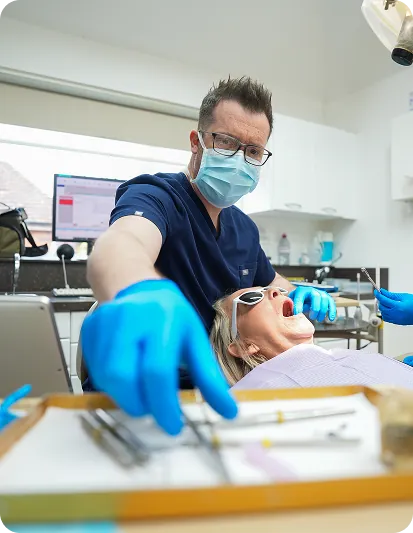
We provide a range of preparatory and maintenance care to support implant treatment and long-term oral health.
Restorative dentistry for crowns and bridges
Gum disease treatment and periodontal care
Digital x-rays and scanning where clinically relevant

Routine hygiene appointments and plaque control support
Denture services and adjustments
Ongoing implant reviews and maintenance checks
If you live around the A127 (Essex) corridor and would like to discuss implants, Start Smiling Dental Practice in Ingatestone can help by phone or email. If you contact us we will explain the assessment process and any records that may be needed before a clinical appointment. For practice details you can also use the online contact form to get in touch contact us.

To explore whether dental implants are suitable for you, arrange an initial consultation at our Ingatestone practice. The clinician will outline the assessment steps, any tests required and the likely sequence of care for dental implants so you can decide with clear information. If you are looking for dental implants near A127 (Essex), book a consultation with our Ingatestone team to discuss your concerns and the next step towards an appropriate clinical assessment.