Replace One Missing Tooth
01
An implant-supported crown may replace one missing tooth where suitable, following clinical assessment and careful planning.
If you live in Basildon and are considering dental implants, our practice can explain what implants involve and whether they may suit you. Dental implants are artificial tooth-root replacements placed in the jaw to support crowns, bridges or dentures; we will discuss options that match your goals and clinical needs.
Start Smiling Dental Practice is based in Ingatestone and offers private dental implant assessment and treatment planning for people travelling from Basildon and the surrounding area. We will explain the assessment process, likely stages and possible alternatives, and you can call 01277 353456 to discuss an implant consultation. For more background on the treatments we provide, see our dental implant treatment information.
Appointments are planned to fit travel arrangements and we will outline what to expect at your visit and how treatment stages are scheduled.

Dental implants can address a range of functional and aesthetic concerns where clinically appropriate.
An implant-supported crown may replace one missing tooth where suitable, following clinical assessment and careful planning.
Multiple implants can carry individual crowns or a bridge to restore several adjacent teeth and rebuild chewing function.
Implant-retained dentures can be attached to implants to reduce movement and improve confidence when eating and speaking where clinically suitable.
Securing a denture to implants can reduce slipping and the need for adhesives for some patients following assessment and planning.
Using an implant to replace a tooth can avoid altering neighbouring teeth that might otherwise be prepared for a bridge.
Implant restorations use tooth-coloured crowns, bridge units or denture teeth to recreate a natural appearance once healing is complete.
Implant-supported restorations can improve biting and chewing compared with some removable options for suitable patients.
Replacing missing teeth with implant-supported restorations can help support facial soft tissues in some situations, depending on individual bone and gum conditions.
Our clinicians provide restorative and implant treatments with careful assessment and clear explanations to help you make informed decisions; meet the team on our dental team page.
We use digital records, X-rays and scans where appropriate to plan implant placement and restorations safely.
We discuss likely stages, aftercare and what to expect so you understand the process and recovery.
Fees vary with case complexity and number of implants; we explain costs in advance and confirm informed consent before treatment starts.
Local anaesthetic is commonly used for implant placement and we will discuss pain control and, where appropriate, conscious sedation options.
We offer review appointments and professional maintenance to support long-term implant health and hygiene.
A clinician reviews your medical and dental history, examines your gums and remaining teeth, and discusses your goals to assess implant suitability.
X-rays and digital scans may be taken to plan implant position, angulation and to identify any need for preparatory procedures.
Active gum disease or tooth infection is treated first; some patients may need bone grafting or other preparatory work, confirmed after assessment.
Titanium posts are surgically placed into the jawbone, usually under local anaesthetic; the clinician will explain anaesthesia and aftercare before the procedure.
A period of healing allows the implant to integrate with the bone; timing varies and the clinician will review progress and readiness for restoration.
When clinically appropriate a crown, bridge or denture is fitted to the implant and ongoing hygiene and review appointments are arranged.
Implants may be a suitable option if you are missing one or more teeth or need improved denture stability, but suitability depends on many factors. The clinical team will consider your gums, remaining teeth, bone quality and quantity, bite, medical history, medicines, smoking status and treatment goals before recommending a plan.
Some patients require additional procedures such as bone grafting or gum treatment before implants can be placed. Implant treatment carries risks including the possibility that an implant may not integrate successfully; your clinician will explain the risks, alternatives and expected stages so you can give informed consent.
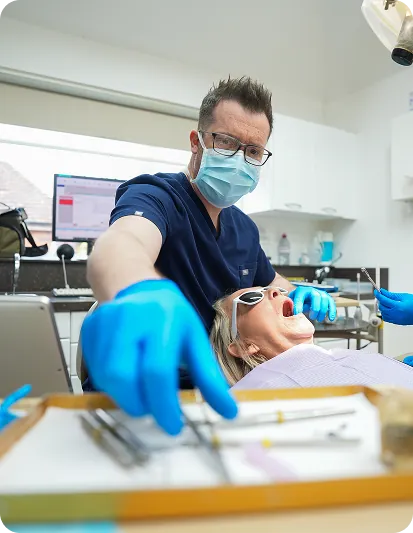
Care before, during and after implant treatment supports long-term outcomes.
Hygiene care to support implant and gum health
Periodontal care for active gum disease before implant planning
Restorative dentistry for crowns and bridges

Digital imaging and radiographs where clinically appropriate
Aftercare advice for medication, healing and comfort management
Regular implant reviews and professional maintenance
If you are travelling from Basildon to Start Smiling in Ingatestone you can travel by car, rail or bus; the team will suggest appointment times and explain what to expect when you arrive.
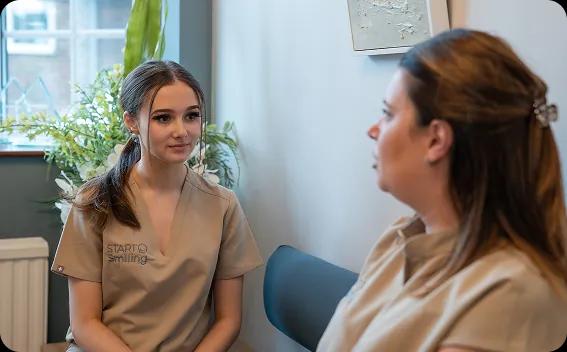
If you would like to discuss dental implants near Basildon, call Start Smiling Dental Practice on 01277 353456 to arrange an implant consultation at our Ingatestone practice. During your appointment the clinician will review your oral health, explain suitable options and outline likely stages and next steps.