Replace One Missing Tooth
01
An implant-supported crown may replace one missing tooth where suitable, following clinical assessment and careful planning.
If you are connected with Becket Keys Church of England School and are considering dental implants, we can explain how implants work and what a clinical assessment involves. Our team will discuss whether dental implants are a suitable option for your needs and what planning or preparatory care might be required.
At our Ingatestone practice we offer private dental implant treatment tailored to each patient. Dental implants are artificial tooth-root replacements, commonly titanium posts placed in the jawbone to support a crown, bridge or denture.
Before any treatment starts we take a full medical and dental history and recommend any necessary investigations. For more detail on the clinical pathway see our dental implant treatment page.

Implant-supported restorations can address different patterns of tooth loss and functional needs.
An implant-supported crown may replace one missing tooth where suitable, following clinical assessment and careful planning.
Two or more implants can support a fixed bridge without relying on adjacent teeth for support.
Implants can retain or stabilise a denture to improve function and comfort for some patients.
Implant-supported restorations often restore bite function better than leaving gaps.
Replacing missing teeth can help support facial contours in some situations where tooth loss has caused volume loss.
An implant crown sits on its own root replacement so adjacent teeth are not prepared as they would be for a bridge.
Implants can support crowns, bridges or implant-retained dentures depending on clinical needs.
With good home care and regular professional reviews implants can be maintained as part of ongoing dental care.
Our clinicians and staff will involve you in planning and decisions about implant care.
The practice aims to provide a comfortable environment for consultations and treatment.
Assessments may include clinical examination, X-rays or digital scans where clinically appropriate.
We explain risks, alternatives and expected stages so you can make an informed choice.
After treatment we offer professional reviews and hygiene advice to help you care for implants.
If additional specialist input is clinically appropriate, we will discuss referral options for you.
We review your oral and medical history, examine your mouth and discuss goals to assess implant suitability.
When needed we take X-rays or digital scans to plan implant position and the final restoration.
Active gum disease or tooth decay is treated first; some patients may need bone grafting or other preparatory procedures.
The implant post is placed surgically, commonly under local anaesthetic, with aftercare instructions explained beforehand.
Time is allowed for the implant to integrate with bone and for soft tissues to settle; follow-up visits monitor progress.
A crown, bridge or denture is fitted when clinically appropriate and you will be advised about cleaning and review schedules.
Dental implants may be suitable for people with one or more missing teeth or for those wanting improved stability for a denture, but suitability depends on individual clinical factors. A detailed assessment will consider gum health, remaining teeth, bite, bone quantity and quality, medical history, medicines and smoking status. Some patients need preparatory procedures such as bone grafting; others do not.
Because implant treatment is surgical and carries potential risks, we will explain alternatives such as bridges, traditional dentures or choosing not to replace a tooth so you can weigh the options. If an implant does not integrate or complications occur, your clinician will explain management choices, which may include removing the implant and allowing the site to heal before considering replacement. Good oral hygiene and regular professional reviews are important for long‑term implant care.
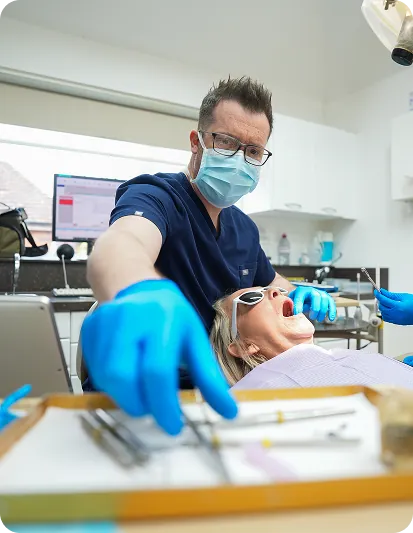
We provide a range of services to support planning, treatment and long-term implant maintenance.
Restorative care for crowns and bridges to support implant planning and final restorations.
Routine dental examinations and assessments to monitor oral health.
Periodontal care to treat gum conditions before and after implant treatment.

Hygiene appointments and advice, including tailored hygiene care to support long-term implant maintenance.
Digital imaging and planning where clinically appropriate.
Referral arrangements when additional specialist services are required.
If you are based at Becket Keys Church of England School and wish to visit Start Smiling, our Ingatestone practice is reachable by car, local bus or rail from the broader area. We will provide practical information to help you plan your appointment when you book.

If you are based at Becket Keys Church of England School and would like to discuss dental implants from our Ingatestone practice call Start Smiling Dental Practice on 01277 353456 to arrange a consultation.
During the appointment we will review your needs, explain possible options and any recommended investigations. Costs vary by complexity and number of implants; please ask to see our fee guide when you book.