Replace A Full Arch Of Teeth
01
Multiple dental implants may support replacement teeth for a complete upper or lower arch where clinically appropriate, following detailed assessment and planning.
Start Smiling Dental Practice in Ingatestone welcomes patients from Brentwood School Sixth Form exploring full arch dental implants as a considered option to replace a complete upper or lower arch. Multiple dental implants are placed in the jawbone to support replacement teeth across a full upper or lower arch, and during assessment we explain the differences between fixed implant-supported bridges and implant-retained removable overdentures so you can make an informed choice.
We provide private full arch dental implant care for people travelling from Brentwood School Sixth Form who want a considered, clinic-based approach to replacing a full upper or lower arch. Treatment is tailored to your mouth, medical history and restorative goals, with time to consider options and no pressure to proceed. Your assessment and treatment planning are coordinated by our dental team, who explain each stage and the likely next steps at a pace that suits you.
Potential benefits and practical effects of full arch implant treatment.
Multiple dental implants may support replacement teeth for a complete upper or lower arch where clinically appropriate, following detailed assessment and planning.
Implant-supported restorations can restore greater chewing ability compared with some conventional dentures when anatomy and the planned restoration allow.
Implant-retained options can reduce movement of removable dentures, improving comfort when speaking and eating.
In appropriate cases, implants can reduce the need for frequent adhesive use or continual adjustment of a removable denture.
Replacing missing teeth with an implant-supported restoration can help maintain facial contours as part of a wider care plan.
Full arch treatment may be considered when many remaining teeth are failing or cannot be predictably restored, subject to careful assessment.
Implant-supported restorations can simplify daily function for some people compared with complex denture care when chosen after assessment.
Restorations supported by implants can feel more secure for some people during speech and social situations, depending on individual expectations and outcomes.
Choices and likely outcomes vary by clinical need; your clinician will discuss benefits, limitations and alternatives before any decision.
We explain options clearly and give you time to consider choices without pressure.
Treatment planning combines clinical assessment with restorative aims to achieve a natural-looking result where possible.
Your assessment, planning and follow-up are coordinated by our dental team with clear explanations at every stage.
Appropriate imaging, digital records and models are used when needed to design predictable care.
We emphasise professional review and hygiene care to protect implant health over time.
Because full arch care varies by clinical need, the current fee guide helps set expectations before a personalised estimate is prepared.
A dentist reviews oral health, gum condition, remaining teeth, bite, medical history, medicines, smoking status and expectations to determine suitability; suitability varies between patients and requires individual clinical assessment.
X-rays, digital scans and sometimes 3D imaging are used where clinically appropriate to design a restorative plan and discuss options with you.
Gum disease stabilisation, restorative treatment of salvageable teeth or bone augmentation are planned and completed before implant placement if required.
Implants are placed surgically, commonly under local anaesthetic; number and position depend on your anatomy and chosen restoration design and are not fixed.
The team monitors healing and integration of implants with scheduled reviews; timings and sequence vary between patients and arches.
Once implants are integrated and the clinical team is satisfied, the final bridge or overdenture is fitted when clinically appropriate and a maintenance plan is agreed.
Suitability varies between patients and is confirmed only after an individual clinical assessment. Full arch implant treatment may be considered when many teeth in an arch are missing or when remaining teeth have a poor prognosis, but it is not appropriate in every case.
Remaining teeth are evaluated and, when teeth can reasonably be retained, keeping them is often preferred to unnecessary removal. Factors such as bone quantity and quality, gum health, bite, medical history, medicines, smoking, oral-hygiene ability and personal expectations all influence whether full arch replacement is appropriate.
We will discuss alternatives such as conserving and restoring suitable teeth, conventional dentures or implant-retained removable options so you can weigh benefits, limitations and potential risks before deciding.
Complementary care that supports implant health and long-term oral health.
Routine dental check-ups
Professional hygiene care
Tooth restoration with crowns and bridges when appropriate
Gum health stabilisation and periodontal care
Conservative dentistry aimed at preserving teeth where possible
Ongoing implant and restoration reviews
Regular professional review and hygiene support are important parts of successful long-term restoration care.
If you are visiting from Brentwood School Sixth Form, our Ingatestone practice is reachable by car, train or bus. We will help you prepare for a first appointment and explain what to bring so your consultation is efficient and useful.
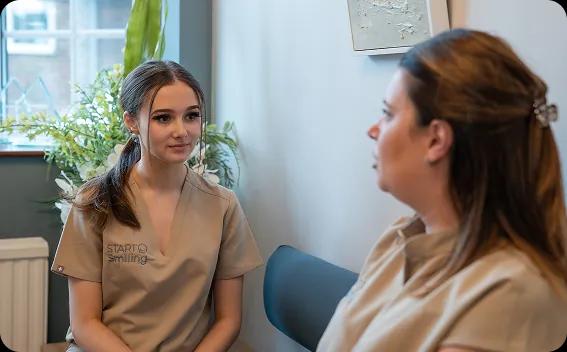
If you would like to discuss full arch dental implants near Brentwood School Sixth Form, arrange a consultation at Start Smiling Dental Practice in Ingatestone so we can perform a thorough assessment and explain options in person. For an overview of implant care and what to expect, see the full arch and implant information on our dental implants page, or call 01277 353456 to speak with the team and arrange a suitable appointment.