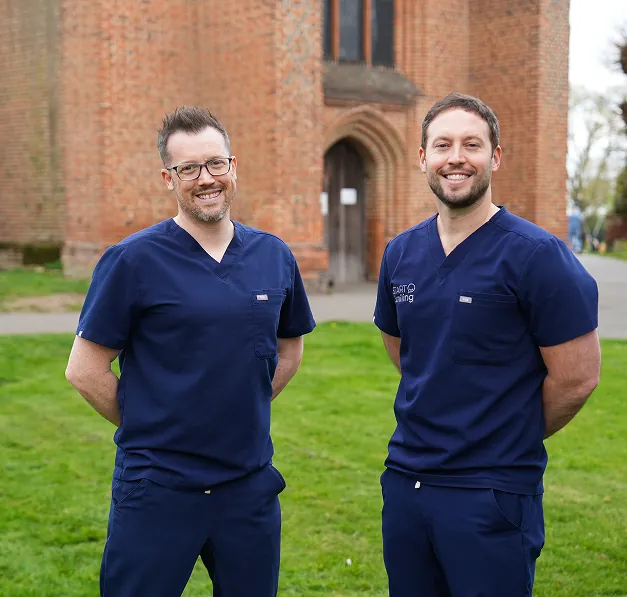
Replace A Full Arch Of Teeth
01
Multiple dental implants may support replacement teeth for a complete upper or lower arch where clinically appropriate, following detailed assessment and planning.
If you are seeking full arch dental implants near Chelmsford Business Park, Start Smiling Dental Practice in Ingatestone offers private assessment, planning and restorative care. Our private assessment and planning follow recognised dental implant treatment principles so you understand the likely steps and decisions before proceeding.
We welcome patients from Chelmsford Business Park and nearby Chelmsford city centre who want considered private dentistry for extensive tooth loss or for unstable dentures. Our approach is patient-first and restorative, and we assess remaining teeth and gums, discuss alternatives and only recommend a full-arch implant solution when it is clinically appropriate and aligns with your goals.
Where teeth can reasonably be maintained, we will not remove them simply to make way for implants. Treatment planning considers oral health, gum condition and long-term maintenance before any irreversible decisions are made.
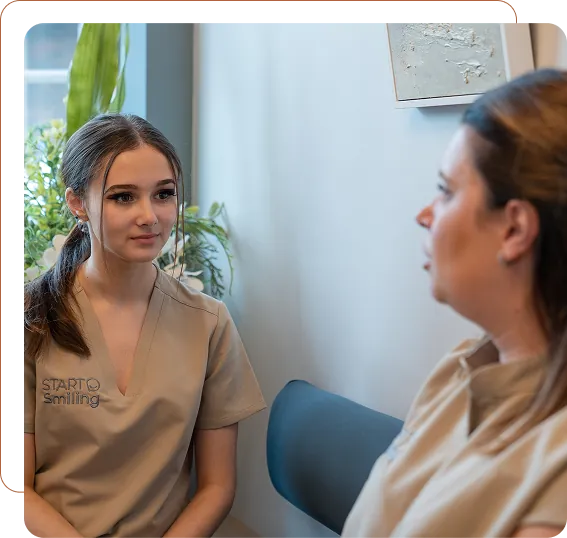
Full-arch implant treatment can address a complete upper or lower arch and improve function and stability for people with extensive tooth loss.
Multiple dental implants may support replacement teeth for a complete upper or lower arch where clinically appropriate, following detailed assessment and planning.
Implant-supported restorations can provide more secure biting and chewing compared with an unstable conventional denture, helping you eat a wider range of foods.
For people who struggle with a loose denture, implants can stabilise and retain replacement teeth more predictably than adhesives alone.
Restorations planned for a full arch can help restore profile and lip support that may change after tooth loss.
Implant-retained or implant-supported restorations can reduce reliance on adhesives where that approach is clinically appropriate.
Teeth are designed to match your mouth for a balanced appearance and a comfortable bite as part of the restorative plan.
If a few teeth are failing, a full-arch plan may be one option after careful assessment rather than automatic removal of all teeth.
Implants require ongoing review and home care, which supports the long-term health of your restoration and surrounding tissues.
Your clinician will explain likely benefits and limitations during assessment so you can decide with clear information.
We take time to explain options and help you make an informed decision without pressure.
Records, X-rays or 3D imaging are used where clinically appropriate to plan surgery and restorations carefully.
Your assessment and treatment planning are coordinated by our dental team, with each stage explained before you decide how to proceed.
We treat gum conditions and stabilise remaining teeth where possible to improve long-term outcomes.
You will receive a written treatment plan and a personalised estimate following clinical assessment.
Professional reviews and hygiene support are arranged to help you care for implant-supported restorations.
The clinician reviews your medical history, mouth, gum condition and expectations to judge suitability and discuss risks and alternatives.
X-rays, digital impressions or 3D imaging may be taken where appropriate to plan implant positions and the final restoration.
Gum treatment, stabilising salvageable teeth, extraction of irreparable teeth or bone grafting may be advised in some cases.
Multiple implants are placed surgically into the jawbone to support the planned restoration; anaesthesia options and aftercare are discussed beforehand.
Healing and implant integration vary by patient; the clinician monitors progress and adapts the plan if required and will not promise guaranteed timings.
The definitive bridge or overdenture is fitted when clinically appropriate and ongoing maintenance is scheduled to protect the result.
Full-arch implant treatment may be considered when many or all teeth in an arch are missing, when the remaining teeth have a poor prognosis, or when a conventional denture does not meet your needs. Suitability varies between patients and requires individual clinical assessment of bone, gums, remaining teeth, medical history, medicines, smoking, hygiene ability and expectations.
Alternatives such as conventional dentures, retaining and restoring healthy teeth, or implant-retained removable dentures may be more appropriate depending on your situation. We will balance preserving salvageable teeth with achieving a stable, functional outcome rather than removing teeth automatically.
Treatment has risks, including the possibility that one or more implants may fail to integrate or that prosthetic complications can occur; these risks and the likely management are discussed before you consent to proceed.
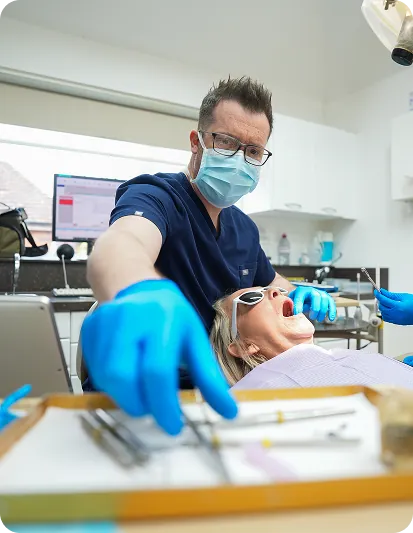
Routine and preparatory care helps support implant treatment and the long-term health of your mouth.
Professional hygiene care
Restorative dentistry including crowns, bridges and fillings can restore or retain salvageable teeth as part of an overall plan.
Denture services to design and adjust conventional and implant-retained dentures where suitable.
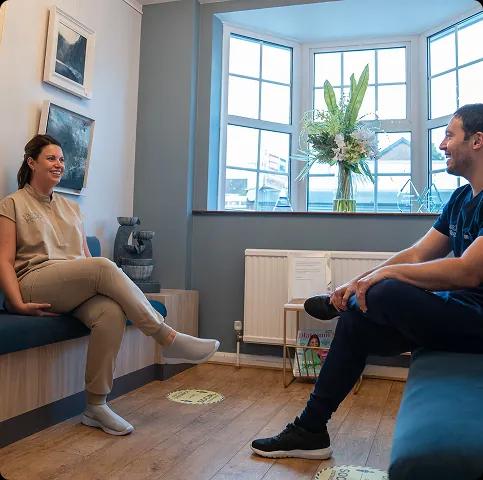
Periodontal treatment to stabilise gum disease before implant surgery.
Emergency and aftercare with prompt review if you have concerns during treatment or healing.
Ongoing implant reviews with regular check-ups and maintenance visits to monitor implant and restoration health.
Professional hygiene and regular reviews are arranged to help protect your implant restoration.
Patients travel from Chelmsford Business Park to reach our Ingatestone private dental practice by car, train or bus. Start Smiling Dental Practice, 5 Market Place, Ingatestone, Essex, CM4 0BY, and our team will explain what investigations might be needed before your appointment.
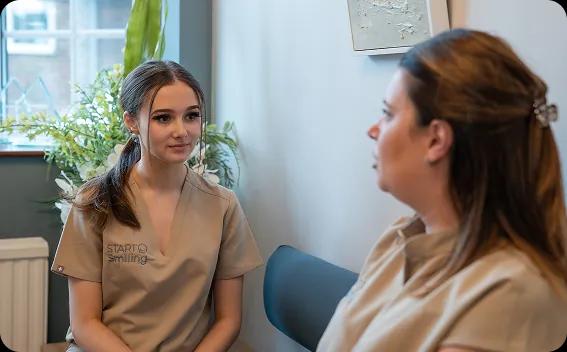
If you would like a personal consultation for full arch dental implants near Chelmsford Business Park, call Start Smiling Dental Practice on 01277 353456 to arrange an assessment.
During the consultation the clinician will explain likely investigations, discuss alternatives and provide a written estimate after you have had a clinical assessment.