Replace A Full Arch Of Teeth
01
Multiple dental implants may support replacement teeth for a complete upper or lower arch where clinically appropriate, following detailed assessment and planning.
Start Smiling Dental Practice is based in Ingatestone and welcomes patients from the Combined Military Services Museum area who are exploring full arch dental implants. Multiple dental implants are placed in the jawbone to support replacement teeth across a full upper or lower arch. Our approach to assessment and planning uses scans and records to decide whether this option is appropriate for you and to design the most suitable restorative outcome.
If you live near the Combined Military Services Museum and are considering replacement teeth for a whole upper or lower arch, Start Smiling provides calm, modern restorative dentistry in Ingatestone. We do not have a clinic at the museum. If full arch implants are a potential option for you, we will explain the assessment, likely investigations and the choices available so you can make an informed decision in your own time. You can also read more about implant treatment on the Start Smiling dental implants treatment page at our dental implants treatment page.
Common aims and practical benefits of full arch treatment are listed below.
Multiple dental implants may support replacement teeth for a complete upper or lower arch where clinically appropriate, following detailed assessment and planning.
Implant-supported restorations often provide better retention and confidence for people who find conventional dentures insecure.
Start Smiling Dental Practice is based in Ingatestone and welcomes patients from Combined Military Services Museum.
Replacing missing teeth may help preserve facial proportions that can change when many teeth are absent, depending on your situation.
Implant-retained options can reduce slipping or rocking of removable dentures for suitable candidates.
Some restorations are designed to allow straightforward daily cleaning routines adapted to the prosthesis and your dexterity.
We assess remaining teeth carefully and aim to keep and restore those that have a reasonable prognosis rather than remove teeth automatically.
Full arch treatment can be part of a planned approach that combines surgical and restorative stages to meet your oral health goals.
We give clear explanations so you can consider options without pressure and ask questions throughout the pathway.
Scans and imaging are used to plan implant positions and the restorative design carefully.
Treatment is organised around the intended final teeth and how they will look and function for you.
Plans reflect your oral health, medical history, medicines and personal goals.
Your assessment and treatment planning are coordinated by our dental team, who will explain each stage before you decide how to proceed.
Because full-arch treatment varies by clinical need, the current fee guide is a useful starting point before a personalised estimate is prepared.
Your clinician will review oral and general health, remaining teeth, gum condition, bite, medicines and expectations.
X-rays, scans or digital records may be taken to plan implant positions and the restorative design precisely.
Gum care, treatment of salvageable teeth or bone augmentation may be recommended when appropriate.
Implants are placed surgically into the jawbone under local anaesthetic or other agreed measures; the exact approach depends on your plan.
The team will monitor implant integration and soft tissue healing; timings vary between patients and by arch.
When clinically ready, the definitive bridge or overdenture is fitted and an ongoing maintenance plan is agreed.
Suitability varies between patients and requires an individual clinical assessment. Full arch implant treatment may be considered when many or all teeth in an arch are missing, when remaining teeth have a poor prognosis, or when a conventional denture is not providing adequate function or comfort. Remaining teeth are assessed individually and those that can reasonably be maintained will not be removed simply to allow an implant solution.
Several factors influence suitability, including gum health, bone quantity and quality, your bite, medical history, prescribed medicines, smoking, ability to clean a restoration and realistic expectations. X-rays, scans or 3D imaging are commonly used to assess these factors. Preparatory care such as gum stabilisation, extractions, or bone grafting may be needed in some cases. We will explain risks, benefits and alternatives, and discuss how complications such as implant non-integration or prosthetic problems would be managed.
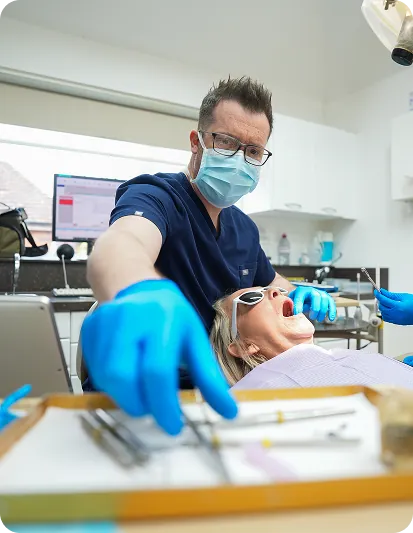
Ongoing care and related treatment options that support full arch outcomes.
Long-term maintenance may include professional hygiene care alongside regular reviews and home cleaning instruction.
Where possible, crowns and bridges are considered to maintain remaining teeth when appropriate.
Bone augmentation is offered when indicated and is not required for every patient.
Restorations are planned to balance function, appearance and ease of cleaning.
Implants and restorations are reviewed at intervals to check health and function.
You will receive practical guidance on cleaning around and beneath the restoration suited to your prosthesis.
Patients visiting from the Combined Military Services Museum area travel to our Ingatestone practice by common local modes such as car, bus, train or taxi. Our team will explain appointment details, what to bring for your first consultation and whether any imaging should be arranged before or at your visit.
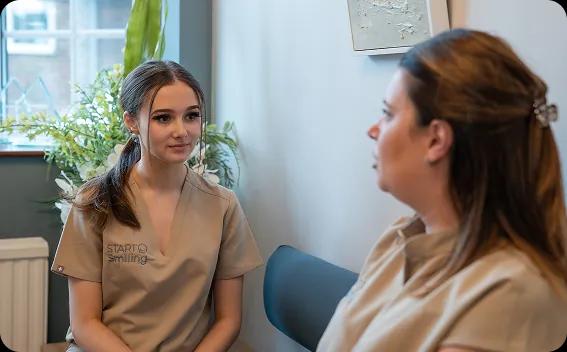
If you live near the Combined Military Services Museum and would like to discuss full arch dental implants, call Start Smiling Dental Practice in Ingatestone on 01277 353456 to arrange an initial consultation.
The clinician will explain the assessment process, likely investigations and the personalised estimate that follows clinical assessment.