Replace A Full Arch Of Teeth
01
Multiple dental implants may support replacement teeth for a complete upper or lower arch where clinically appropriate, following detailed assessment and planning.
Start Smiling Dental Practice is based in Ingatestone and welcomes enquiries from people travelling from Greater Anglia Rail Line and the wider London and East Anglia area. Full arch dental implants may be an option if you are coping with many missing teeth, an unstable denture or an arch with a poor long-term prognosis. Multiple dental implants are placed in the jawbone to support replacement teeth across a full upper or lower arch, acting as artificial tooth-root replacements to support either a fixed implant-supported bridge or a removable implant-retained overdenture depending on the clinical plan.
At Start Smiling we provide private dental practice care in a calm, modern setting. Treatment planning and surgical stages are coordinated by our dental team, who explain each step before you decide how to proceed. Your assessment is carried out at our Ingatestone practice and includes an appraisal of oral health, medical history, medicines, smoking status and your goals.
Where appropriate we use imaging and digital records as part of careful planning for full arch care. More detail on our approach to dental implant treatment is available on the dental implants treatment page: dental implants.
Benefits patients may experience when a full arch is restored using dental implants.
Multiple dental implants may support replacement teeth for a complete upper or lower arch where clinically appropriate, following detailed assessment and planning.
Implant-retained restorations can reduce movement compared with some conventional dentures and improve confidence when eating and speaking.
A well planned restoration can provide stronger, more predictable function for everyday eating.
Replacing a full arch can help maintain facial contours affected by tooth loss when planned alongside other restorative care.
Implant-retained options often provide a more secure alternative to adhesive-dependent dentures.
Careful assessment determines whether existing teeth can be maintained rather than removed unnecessarily.
Implant-supported bridges or removable overdentures create a defined structure for the replacement teeth to attach to.
Restorations are designed so you and the clinician can access areas for effective home care and professional maintenance.
We take time to explain benefits, limitations and risks in plain language so you can decide without pressure.
Assessment and treatment planning are coordinated by our dental team, who will outline each clinical stage.
We use appropriate imaging and records to plan implant and restorative stages safely for your circumstances.
Replacement teeth are designed to look natural and to support long-term function and oral health.
Long-term success depends on review and professional hygiene care provided from Ingatestone.
Because full-arch treatment varies by clinical need, the current fee guide is a useful reference before a personalised estimate is prepared.
A clinician reviews your mouth, gums, remaining teeth, medical history, medicines, smoking status and expectations to assess suitability.
Where appropriate we take X-rays, digital scans and/or 3D imaging and plan tooth positions, implant locations and the restorative design.
Any required gum treatment, restorations or extractions are undertaken first; bone grafting may be recommended in some cases but is not always required.
Implants are placed surgically under local anaesthetic; the number and position depend on anatomy and the restoration planned.
Implants are monitored as they integrate with the jawbone; healing times vary and the team will explain what to expect.
Once clinically appropriate, the final bridge or overdenture is fitted and a maintenance schedule agreed to support long-term implant health.
Full arch implant treatment can help people with extensive tooth loss, an arch that no longer functions well with a conventional denture, or where remaining teeth have a poor prognosis. Suitability varies between patients and requires individual clinical assessment.
Assessment considers bone quality, gum health, remaining teeth, bite, general health, medicines, smoking and your ability and willingness to maintain oral hygiene. Remaining teeth are carefully assessed and preserved where clinically reasonable rather than being removed to accommodate implants, and alternatives such as improved dentures, retaining and restoring suitable teeth, or partial implant options may be recommended.
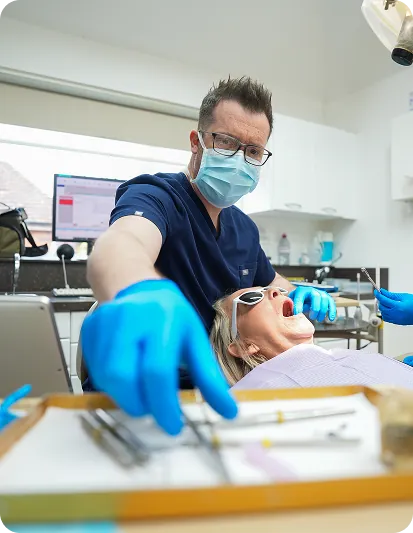
Additional treatments and maintenance we provide to support full arch care.
Professional hygiene care to manage gum health and support implants
Restorative work such as crowns and bridges to maintain or restore suitable teeth
Gentle tooth extractions when clinically necessary
Bone grafting or ridge preservation where clinically appropriate
Clear home-care instructions for cleaning around implants and restorations
Regular clinical reviews and maintenance appointments
If you are travelling from Greater Anglia Rail Line, our practice in Ingatestone welcomes patients by broad travel modes such as train, car or local bus. We keep the visiting process simple and are happy to discuss appointment timings and what to expect at your first visit so you can plan with confidence.
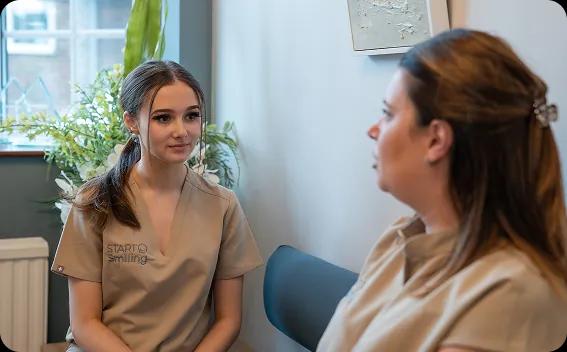
If you would like a full arch assessment at our Ingatestone practice, call 01277 353456 to speak with our team and arrange an appointment. We will explain the next steps, which records may be needed and how a personalised estimate for full arch dental implants is prepared following clinical assessment. Patients travelling from Greater Anglia Rail Line are welcome to enquire and we will help you understand whether this treatment pathway is appropriate for your needs.