Replace A Full Arch Of Teeth
01
Multiple dental implants may support replacement teeth for a complete upper or lower arch where clinically appropriate, following detailed assessment and planning.
Full arch dental implants replace or restore a complete upper or lower arch of teeth using multiple dental implants placed in the jawbone to support replacement teeth across a full upper or lower arch. At Start Smiling Dental Practice in Ingatestone we plan care around your oral health, lifestyle and goals, and we welcome enquiries from people living in Kings Park who would like to learn whether full arch dental implants may help them. Treatment may involve a fixed implant-supported bridge or a removable implant-retained overdenture depending on the clinical plan and your preferences. For an overview of how implants work in broader restorative care, see our full arch dental implant treatment information.
We are a private dental practice providing calm, patient-focused restorative dentistry for people travelling from Kings Park and the surrounding area. Your care begins with a detailed assessment, clear explanations and time to ask questions so you can make an informed decision without pressure.
Care is coordinated by the dental team who explain each stage and the options available, and we take time to discuss risks, benefits and realistic expectations before treatment begins.
Full arch implant options can address function, appearance and long-term oral health with careful planning.
Multiple dental implants may support replacement teeth for a complete upper or lower arch where clinically appropriate, following detailed assessment and planning.
Implant-supported full arches help restore effective chewing capacity compared to poorly fitting traditional dentures.
Implant-retained options can reduce movement and improve comfort compared with unsupported removable plates.
Replacing a full arch can help support facial soft tissues that may have been affected by tooth loss.
Plans can provide either a fixed bridge or a removable overdenture depending on your needs and oral condition.
Well designed restorations can help with speech clarity that may be affected by missing teeth or poorly fitting dentures.
Digital records, scans and careful planning allow a restoration to be designed to fit your bite and aesthetic goals.
Implant care is combined with gum health assessment, hygiene instruction and regular maintenance to support ongoing function and comfort.
Treatment options are personalised and discussed with you so you understand the expected reviews, maintenance and likely steps involved.
We prioritise clear explanations so you understand risks, benefits and alternatives before deciding.
The practice offers a relaxed setting with contemporary equipment to support assessment and treatment.
Your assessment and treatment planning are coordinated by our dental team, who will explain each stage.
Plans are tailored to your anatomy, bite and oral health rather than a one-size-fits-all approach.
We set realistic expectations for reviews and hygiene to help protect your investment in implant restorations.
You will receive a personalised estimate after assessment and the practice can provide its current fee guide on request.
Your clinician will review oral health, gum condition, remaining teeth, bite, medical history, medicines, smoking status and cleaning ability to assess suitability.
X-rays, digital scans and sometimes 3D imaging are used where appropriate to plan implant number, position and the restorative design.
Preparatory work may include stabilising gum disease, restoring salvageable teeth or removing teeth that cannot be maintained; grafting is required for some but not all patients.
Implants are placed into the jawbone under local anaesthetic and other measures as clinically appropriate; the team will explain what to expect before and after each procedure.
Healing and integration vary between patients and by arch; regular reviews and provisional restorations are part of careful planning and immediate fixed final teeth are not guaranteed.
The definitive bridge or overdenture is fitted when clinically appropriate and you will be shown how to care for the restoration and implants with long-term reviews.
Suitability varies between patients and requires an individual clinical assessment. We will consider whether remaining teeth can reasonably be restored and maintained; removing healthy teeth is not an automatic step simply to fit implants.
Factors such as gum disease, bone quantity and quality, your general health, medicines, smoking status and oral hygiene ability all affect whether full arch replacement is appropriate. Alternatives include maintaining and restoring suitable teeth, conventional dentures, implant-retained removable options or choosing no treatment. The clinician will discuss risks, likely limitations and consent so you can make an informed choice that fits your priorities.
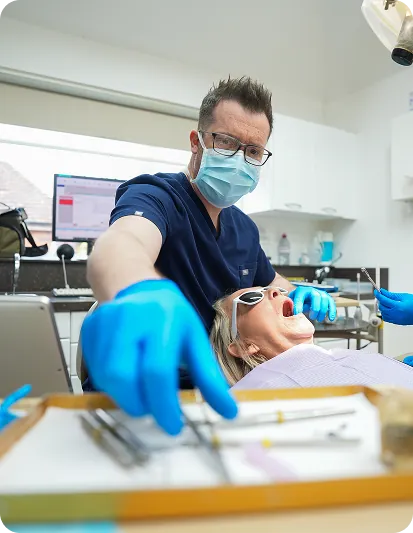
Care before and after implant treatment helps protect long-term function.
Routine dental examinations
Professional hygiene care alongside home cleaning and reviews with personalised instruction and links to further hygiene information at professional hygiene care.
Tooth restorations such as crowns and bridges used to restore suitable remaining teeth when appropriate
Bone and soft-tissue assessment using imaging and clinical examination to identify whether grafting or soft-tissue management may be needed
Personalised aftercare instruction teaching techniques and tools to clean around implant restorations effectively
Regular implant reviews to detect and manage biological or mechanical complications early
Ongoing hygiene and review appointments form a key part of protecting implant restorations.
Start Smiling Dental Practice is based in Ingatestone and welcomes patients travelling from Kings Park by car, train or bus. Our team will explain what to bring and how your first consultation is organised when you call to book.
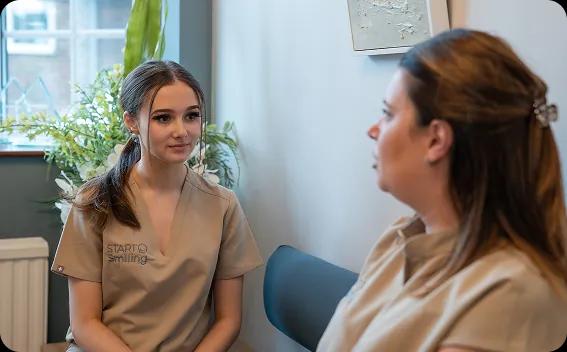
If you would like to explore full arch dental implants with the practice in Ingatestone, call 01277 353456 to arrange a consultation for people travelling from Kings Park.
The clinician will undertake an initial assessment, outline likely investigations and explain the personalised steps needed to produce a clear treatment plan and estimate.