Replace A Full Arch Of Teeth
01
Multiple dental implants may support replacement teeth for a complete upper or lower arch where clinically appropriate, following detailed assessment and planning.
If you are considering full arch dental implants and are located near the M25 (Essex), Start Smiling Dental Practice in Ingatestone offers a measured, patient-centred approach. Full arch dental implant treatment replaces a complete upper or lower arch using multiple dental implants placed in the jawbone to support replacement teeth across the arch. We explain options clearly, plan carefully and focus on long-term oral health while making sure you understand the likely benefits, limitations and next steps. For an overview of implant treatment and how we plan replacement teeth, see our full arch dental implant treatment information.
Start Smiling Dental Practice is based in Ingatestone and welcomes patients from M25 (Essex) who are considering private full arch dental implant treatment. We give time to discuss your priorities, examine your mouth, review medical factors and agree a plan that balances appearance, function and oral-health needs. Your assessment and treatment planning are coordinated by our dental team, and we explain each stage before you decide how to proceed.
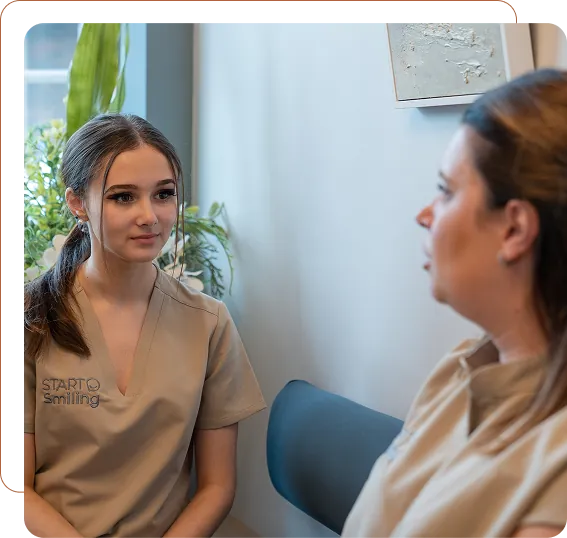
Full arch treatments can address functional, comfort and appearance concerns when planned carefully.
Multiple dental implants may support replacement teeth for a complete upper or lower arch where clinically appropriate, following detailed assessment and planning.
Implant-supported restorations can improve bite stability compared with some removable options, depending on your individual situation.
Implant-retained restorations may reduce movement of removable dentures and the need for adhesives where suitable.
Replacing a full arch can help restore tooth support for lips and cheeks as part of a wider restorative plan.
Some full arch designs allow straightforward daily cleaning and professional maintenance tailored to the chosen restoration.
Full arch treatment may be considered when many teeth have a poor prognosis, with careful assessment of which teeth can be retained.
Records, scans and laboratory planning help design a restoration chosen to meet your expectations and oral conditions.
Restorations are planned with future maintenance in mind, recognising that components and prostheses may need attention over time.
We take time to discuss your goals, concerns and expectations before proposing treatment.
Appointments are arranged to allow clear explanations and relaxed consultations.
We aim for natural-looking outcomes that support both function and appearance.
You will receive plain-English information about risks, benefits, alternatives and likely care.
Different clinicians work together to combine surgical and restorative planning and explain options at each stage.
We arrange reviews and tailored professional support after treatment to protect implant health.
A clinician reviews your oral health, gum condition, remaining teeth, bite, medical history and expectations to assess suitability.
X-rays, scans and impressions may be taken to plan implant position, provisional stages and the final restoration.
Work to stabilise gum disease, restore salvageable teeth or perform other preparatory steps may be recommended; not everyone needs extra procedures.
Multiple dental implants are placed surgically in the jawbone under local anaesthetic; we will explain anaesthesia options and what to expect on the day.
Healing and integration vary between patients; the team monitors progress and decides when to proceed to the restorative phase.
The definitive restoration is fitted when clinically appropriate and a maintenance schedule is agreed to support long-term health.
Suitability varies between patients and requires a detailed, individual clinical assessment. We assess each remaining tooth to decide whether it can be retained; removing teeth is not an automatic requirement simply to provide a full-arch solution.
Factors such as gum health, bone quantity, bite, medical history, medicines you take, smoking and your ability to maintain oral hygiene all influence the recommended plan. Alternatives that may be appropriate include restoring suitable teeth, removable implant-retained dentures, conventional dentures or no treatment.
We explain the possibility that one or more implants may fail to integrate and that prosthetic complications can occur, and we discuss how these issues would be managed as part of your individual plan.
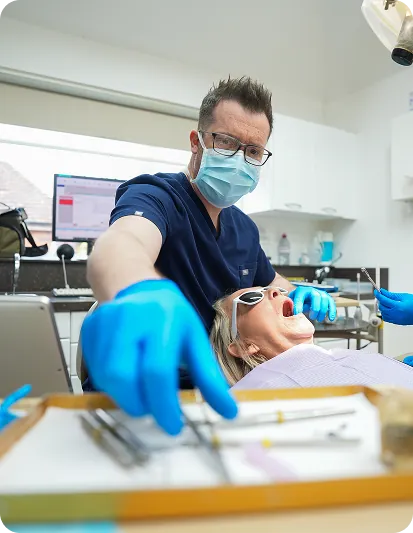
Long-term care and review are planned to protect implant health.
Professional hygiene care alongside regular reviews and careful cleaning at home
Restorative dentistry such as crowns, bridges and provisionals planned to work with implant-supported restorations
Radiographic and digital records including scans and x-rays to support precise planning and review of healing
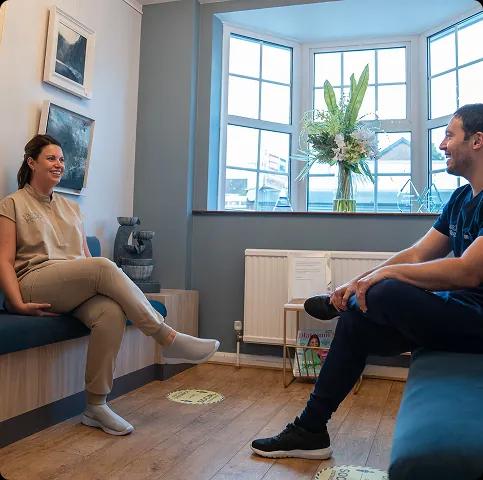
Medical liaison to consider your wider health and medicines when planning surgery and aftercare
Ongoing reviews with periodic clinical checks and maintenance to detect early issues
Oral-hygiene coaching with practical demonstrations and personalised advice
If you are travelling from M25 (Essex) to see Start Smiling Dental Practice in Ingatestone, the practice is reachable by car, train or bus. Our practice is based in Ingatestone, Essex, and our reception team can provide general arrival information and help with appointment arrangements.
If you would like a private consultation to discuss full arch dental implants near M25 (Essex), call our team on 01277 353456 to arrange an initial assessment. We will explain the likely next steps and what records may be needed.
After assessment we can provide a personalised estimate from the current fee guide, which you can view on our fee guide.