Replace A Full Arch Of Teeth
01
Multiple dental implants may support replacement teeth for a complete upper or lower arch where clinically appropriate, following detailed assessment and planning.
Full arch dental implants replace or restore a complete upper or lower arch by placing multiple dental implants in the jawbone to support replacement teeth across that arch; Start Smiling Dental Practice is based in Ingatestone and welcomes enquiries from patients around Queen’s Theatre Hornchurch who are considering full arch dental implants. For a clear explanation of implant-supported replacement teeth and planning, ask about our full arch dental implant treatment during your consultation.
Start Smiling is a private dental practice in Ingatestone offering calm, patient-focused restorative care. If you are considering full mouth dental implants near Queen’s Theatre Hornchurch we explain your options clearly, assess your individual needs and discuss realistic outcomes.
We do not assume that remaining teeth must be removed. Where appropriate we will outline alternatives such as retaining and restoring suitable teeth, conventional dentures or implant-retained removable solutions so you can make an informed choice.
Full-arch options can address missing or failing teeth, improve denture stability and restore function and appearance where clinically appropriate.
Multiple dental implants may support replacement teeth for a complete upper or lower arch where clinically appropriate, following detailed assessment and planning.
When many teeth are missing or have a poor prognosis, a full-arch restoration can offer a long-term plan after careful assessment of remaining teeth and overall oral health.
Start Smiling Dental Practice is based in Ingatestone and welcomes patients from Queen’s Theatre Hornchurch.
Implants can support a fixed implant-supported bridge rather than relying on removable denture clasps when this suits the restorative objectives and clinical findings.
Restorations can rebuild tooth height and support facial tissues where tooth loss has altered appearance and function, planned alongside the restorative design.
Full-arch options can form part of a thoughtful plan when some remaining teeth are judged unreliable for long-term support, but each tooth is assessed individually.
A comprehensive plan considers gum health, bite, bone and general health to create a pathway to treatment that matches patient goals and clinical realities.
Restorations aim to help with eating, speaking and oral hygiene as part of realistic, patient-agreed goals and ongoing maintenance.
We take time to explain options and support informed decisions without pressure, focusing on what matters to each patient.
Your assessment and treatment planning are coordinated by our dental team who explain each stage before you decide.
Digital records, scans and appropriate imaging are used to develop a planned restoration with predictable steps.
Treatment begins with the final restoration in mind so function and appearance are planned together.
We explain possible complications, limitations and alternatives before any treatment proceeds so you can make an informed choice.
Costs are explained after assessment; a personalised estimate follows clinical examination and planning.
Your dentist reviews oral health, gum condition, remaining teeth, bite, medical history, medicines, smoking status and expectations to determine suitability.
X-rays, scans or 3D imaging may be used and a restorative plan developed with provisional options and timelines to match clinical findings and patient goals.
This may include stabilising gum disease, removing teeth that cannot be retained or planning grafting if required; not everyone needs preparatory surgery.
Implants are surgically placed in the jawbone under local anaesthetic and other supported measures as clinically appropriate; the team explains what to expect before and after surgery.
Healing and integration vary between patients; reviews and temporary restorations are scheduled as clinically appropriate and timelines are not fixed.
The definitive bridge or overdenture is fitted when the clinician is satisfied with integration and restoration fit, followed by tailored maintenance and review.
Suitability varies between patients and requires an individual clinical assessment. Full-arch implant treatment may be considered when many or all teeth in an arch are missing, when remaining teeth have a poor prognosis, or when conventional dentures are causing difficulty.
Each remaining tooth is assessed and teeth that can reasonably be maintained and restored should not be removed automatically to make way for implants. Your medical history, medicines, smoking status, oral hygiene, bone quantity and quality, bite and expectations all influence whether a full-arch solution is appropriate.
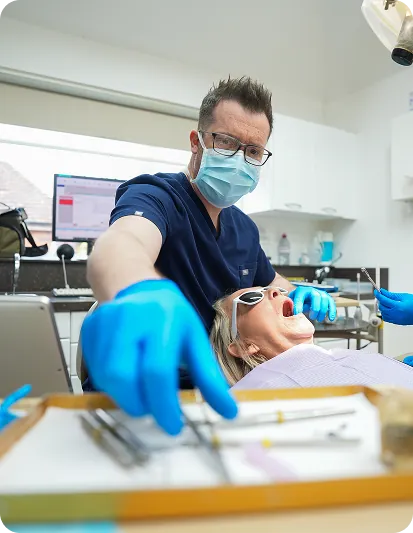
We provide preparatory and long-term care to support implant treatment and overall oral health.
Stabilising Gum Health: Treating active gum disease is a priority before implant surgery where needed.
Tooth Restorations: Crowns and bridges are used to restore any teeth that can be conserved as part of a wider plan.
Professional Hygiene Care: Long-term care may include professional hygiene care alongside regular reviews and careful cleaning at home.
Removable Prosthodontics: We plan and fit overdentures when a removable solution is chosen.
Bite And Occlusion Management: Bite assessment reduces the risk of mechanical complications and supports restoration longevity.
Long-Term Reviews: Scheduled checks help spot and manage biological or mechanical issues early, including implant or prosthetic maintenance.
If you are travelling from Queen’s Theatre Hornchurch to see Start Smiling in Ingatestone, common travel modes include car, rail or local bus services. The team will provide practical guidance on booking a consultation and what to bring for your appointment.
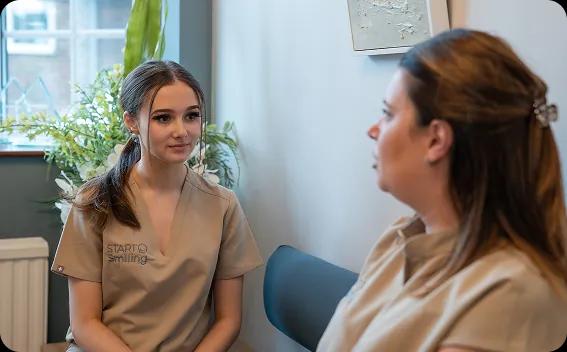
If you would like a private consultation about full arch dental implants near Queen’s Theatre Hornchurch, call Start Smiling Dental Practice on 01277 353456 to arrange an initial appointment. We will take a detailed history, examine your mouth, explain the investigations required and provide a personalised estimate after assessment and planning.