Replace A Full Arch Of Teeth
01
Multiple dental implants may support replacement teeth for a complete upper or lower arch where clinically appropriate, following detailed assessment and planning.
If you are searching for full arch dental implants near St Martin’s School, Start Smiling Dental Practice in Ingatestone provides assessment and careful treatment planning for replacing a complete upper or lower arch. Multiple dental implants are placed in the jawbone to support replacement teeth across a full upper or lower arch and act as artificial tooth-root replacements; suitability varies between patients and follows a clinical assessment of oral health, remaining teeth, jawbone, bite and relevant medical history. Planning often uses X-rays, 3D imaging or digital impressions to decide implant positions and the proposed restoration, and our dental implant treatment page explains these stages in more detail.
Start Smiling Dental Practice is a private dental practice based in Ingatestone and welcomes enquiries from people living or working near St Martin’s School. Our team offers calm, modern restorative dentistry and will take time to explain clinical findings, options and any preparatory care you may need before full arch dental implant treatment is considered. Decisions are made with your informed consent and after discussion of benefits, risks and alternatives, and any preparatory care such as gum stabilisation, tooth removal or grafting is explained as part of the plan.
Full arch implant care can address function, comfort and appearance after careful clinical planning.
Multiple dental implants may support replacement teeth for a complete upper or lower arch where clinically appropriate, following detailed assessment and planning.
Implant-retained overdentures can reduce unwanted denture movement and improve chewing comfort for some patients.
An implant-supported restoration may reduce the need for frequent adjustments for patients struggling with denture fit.
When teeth have a poor prognosis, an implant solution may provide a predictable restorative route after assessment and discussion rather than automatic removal of remaining teeth.
Implant-supported restorations can offer improved biting and chewing compared with some conventional dentures for appropriately assessed patients.
A more secure restoration can reduce worry about slipping dentures or speech changes while eating and talking.
Replacing a full arch can help support soft tissues and facial contours affected by tooth loss when planned and maintained correctly.
Full arch care includes an agreed maintenance plan so your restoration and surrounding tissues are regularly reviewed.
Full arch care includes an agreed maintenance plan so your restoration and surrounding tissues are regularly reviewed.
We explain findings and choices so you can weigh benefits, risks and alternatives at your own pace.
Treatment is delivered in a contemporary practice designed for patient comfort and clear communication.
Your assessment and treatment planning are coordinated by our dental team, with each stage explained before you decide how to proceed.
If gum stabilisation, tooth removal or grafting is needed, the team will explain why and how it fits into your plan.
We make realistic plans for upkeep, possible complications and what to expect in the long term.
Because full arch treatment varies by clinical need, the current fee guide is a useful starting point before a personalised estimate is prepared.
A clinical examination, medical history review and discussion of goals, risks and alternatives form the first step and determine whether full arch treatment is appropriate.
X-rays, 3D imaging or digital impressions may be taken to plan implant positions and the final restoration precisely and to guide whether a fixed bridge or an implant-retained overdenture is most suitable.
Gum therapy, tooth removal or bone grafting may be carried out if clinically required before implants are placed.
Implants are placed surgically, commonly under local anaesthetic, with clear explanations of what to expect before and after the procedure.
Healing and integration of implants with the jawbone vary between patients; provisional restorations may be used and reviews scheduled as needed.
The definitive implant-supported bridge or overdenture is fitted when clinically ready and an ongoing maintenance plan is agreed.
Full arch dental implant treatment may help when many teeth are missing, when an arch has a poor long-term prognosis or when a conventional denture causes significant functional or comfort problems. It is not appropriate in every case and requires individual clinical assessment.
Your dentist will assess any remaining teeth and usually favour preserving teeth that can be reasonably maintained rather than removing them automatically. Decisions take account of your bite, oral hygiene ability, medical history, medicines, smoking status, bone quality and expectations.
Alternatives such as conventional dentures, retaining and restoring suitable teeth, implant-retained removable dentures or other restorative plans will be discussed so you can choose the approach that best fits your circumstances.
We coordinate supporting treatments and long-term reviews alongside implant care.
Professional hygiene care including regular reviews and careful home cleaning
Restorative dentistry such as crowns and bridges to restore suitable remaining teeth
Tooth removal and minor oral surgery planned and carried out when required
Bone grafting and augmentation offered where clinically necessary with explanations about risks and healing
Imaging and digital records including scans and X-rays to improve planning accuracy
Ongoing reviews and maintenance appointments for implant restorations
Our team coordinates supporting treatments and reviews as part of a personalised plan.
We welcome patients travelling to Start Smiling from the St Martin’s School area. Start Smiling Dental Practice is based in Ingatestone and welcomes patients from St Martin’s School. Our reception team will explain appointment options and the next steps after your initial enquiry.
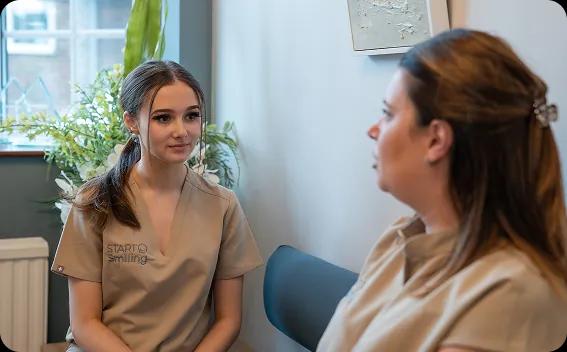
If you would like an initial consultation to discuss full arch dental implants and how we assess patients from St Martin’s School, call 01277 353456 to speak with our team or request an assessment. We will explain the clinical assessment, likely investigations and how we prepare a personalised treatment plan and estimate.