Replace A Full Arch Of Teeth
01
Multiple dental implants may support replacement teeth for a complete upper or lower arch where clinically appropriate, following detailed assessment and planning.
Full arch dental implants near Warley Primary School are a way to replace or restore an entire upper or lower row of teeth. Multiple dental implants are placed in the jawbone to support replacement teeth across a full upper or lower arch, and implants act as artificial tooth-root replacements. Treatment can deliver either a fixed implant-supported bridge or a removable implant-retained overdenture depending on what is clinically appropriate. At Start Smiling Dental Practice in Ingatestone we plan care around your oral health, appearance goals and everyday needs, and we welcome enquiries from people living near Warley Primary School who want to understand their options.
Start Smiling offers private full arch dental implant treatment from our Ingatestone surgery for people considering replacement teeth for a whole arch. Your assessment considers remaining teeth, gum health, bite, jawbone and your medical history so any plan reflects whether existing teeth can be preserved or whether a full-arch restoration is the most appropriate choice. Your assessment and treatment planning are coordinated by our dental team, who will explain risks, alternatives and likely stages before you decide how to proceed.
These outcomes may be achieved where clinically appropriate and after a careful assessment and tailored plan.
Multiple dental implants may support replacement teeth for a complete upper or lower arch where clinically appropriate, following detailed assessment and planning.
A well-planned restoration can help you chew more comfortably and expand the foods you can manage compared with an unstable denture in some cases.
Implant retention can reduce movement of a removable prosthesis and improve everyday comfort for some patients.
Replacing missing teeth can help support the soft tissues around the mouth and reduce a sunken appearance in appropriate cases.
A carefully fitted restoration can help with speech clarity where missing teeth or denture movement previously caused difficulty.
An implant-supported solution may remove pressure points that can occur under conventional dentures for some people.
A restoration designed to look natural can improve how you feel about your smile, where cosmetically appropriate.
Full arch restorations are planned alongside ongoing professional reviews and hygiene care to help preserve implant and gum health.
Individual outcomes depend on clinical assessment, restorative design and ongoing maintenance.
We explain choices clearly, allow time for questions and support informed decision making.
Assessment and digital planning follow the same principles used across our dental implant treatment pathway to map implant positions and the final restoration.
Treatment is coordinated by clinicians and staff who explain each stage and the follow-up required.
Every plan considers your oral health, medical history and daily needs rather than offering a single standard solution.
You will receive clear information about risks, benefits, alternatives and expected maintenance before any treatment proceeds.
We discuss local anaesthesia and sedation options as appropriate and explain what to expect during and after surgical care.
A dentist reviews your oral health, remaining teeth, gums, bite, medical history and lifestyle to determine suitability.
X-rays, digital scans and sometimes 3D imaging are used where clinically appropriate to map bone and plan implant positions.
Gum stabilisation, restoration of salvageable teeth or bone grafting may be recommended before implant placement; not everyone requires these steps.
Implants are placed into the jawbone with suitable anaesthesia; the number and position are chosen for your anatomy and restorative plan.
There is a period of healing while implants integrate with bone; the team will explain aftercare and follow-up appointments.
When clinically appropriate the final bridge or overdenture is fitted and a maintenance schedule of professional reviews and home care is agreed. If an implant does not integrate or a prosthetic complication develops, the team will outline remedial options and next steps.
Suitability varies between patients and depends on a careful clinical assessment plus a clear discussion of your goals. Full arch treatment may be appropriate when many or all teeth in an arch are missing, when remaining teeth have a poor prognosis, or when a conventional denture is unsatisfactory.
Remaining teeth are assessed individually and teeth that can reasonably be maintained are not removed simply to enable implants. Factors such as gum health, bone quantity, bite, medical history, medicines, smoking status and your ability to keep the restoration clean all influence suitability. We will discuss realistic risks, benefits, alternatives such as conventional dentures or removable implant-retained options, and the maintenance required so you can decide with time and information.
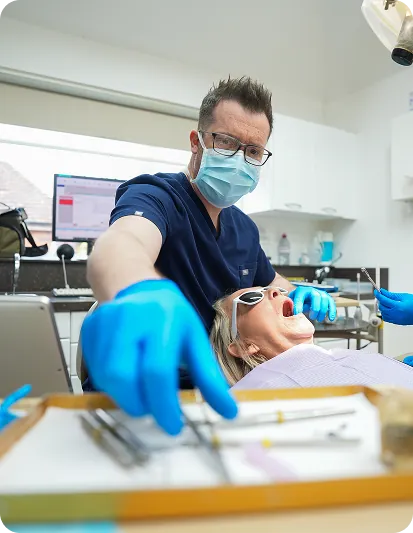
Ongoing professional and restorative care supports implant and mouth health.
Routine professional cleanings and reviews help protect implants and gum health; long-term care may include professional hygiene care alongside home cleaning.
Crowns and bridges are used to restore or support suitable remaining teeth as part of comprehensive care.
You will receive practical advice on cleaning beneath and around implant restorations.
We explain how smoking and certain medical conditions or medicines can affect implant outcomes.
Care to manage gum disease or other oral problems is provided before implant surgery when needed.
When complex surgical or medical input is required, care is coordinated with external services as appropriate.
Long-term care is tailored to your restoration and may combine professional reviews with home maintenance.
Start Smiling Dental Practice is based in Ingatestone and welcomes patients from Warley Primary School and the wider Brentwood area. You can reach the practice by car, local bus or train; our reception team can help with appointment times and practical arrangements when you call.
If you would like to discuss full arch dental implants near Warley Primary School, phone our practice on 01277 353456 to arrange an assessment.
We will explain the pathway, outline likely investigations and provide a personalised estimate once a clinical plan is agreed.