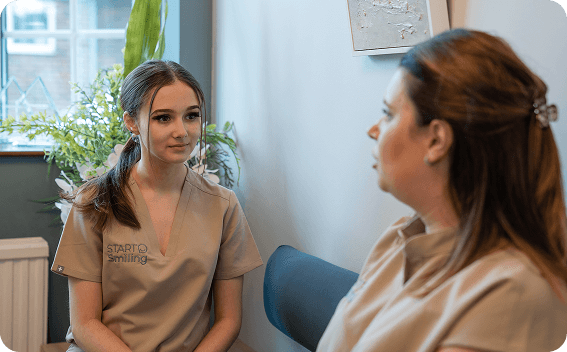
Consultation And Assessment
01
A consultation gives you time to discuss dental anxiety, medical history, sedation suitability, benefits, risks and other options before deciding on care.
If you have previously been unable to finish dental appointments because anxiety, a strong gag reflex or past distress made treatment intolerable, there are assessed options that might help. Patients from Pitsea can discuss sedation and relaxation dentistry at Start Smiling’s Ingatestone practice, where the team explains conscious sedation alongside local anaesthesia and non-sedation approaches so you know what may be appropriate. An individual assessment reviews your medical history, current medicines and the dental work needed, and sets out the likely monitoring, recovery and aftercare steps plus the risks and alternatives before any decision is made.
Start Smiling’s private sedation dentistry service offers an individualised approach for adults who have struggled to complete dental care because of anxiety or past interruptions, combining careful assessment with clear information about options and likely practical arrangements.
Before any sedation is considered the team explains conscious sedation in plain language, discusses whether local anaesthesia is needed, and confirms monitoring, recovery checks and a written estimate so you can decide with confidence.

Private Sedation Dentistry Near Pitsea
A consultation gives you time to discuss dental anxiety, medical history, sedation suitability, benefits, risks and other options before deciding on care.
We discuss non-sedation strategies and relaxation approaches that may reduce anxiety and make appointments easier to tolerate without assuming sedation is required.
During assessment we consider techniques and whether anxiety reduction or sedation might decrease gagging so necessary treatment can proceed.
If you stopped treatment before, we outline staged visits and adjustments to appointments to reduce the chance of repeat interruptions while you consider options.
We explain that conscious sedation uses medication to lower anxiety while you remain awake and able to respond and how this differs from general anaesthesia; the team confirms what is available after assessment.
Where sedation is agreed, the practice follows clinical monitoring and recovery procedures and provides written aftercare instructions relevant to the chosen approach.
You receive a detailed estimate that reflects the sedation approach, appointment length and dental work, together with information about risks and alternatives before consenting.
For longer or more complex procedures we discuss whether sedation or other support could make treatment manageable and how appointments would be organised.
Clinicians explain sedation and relaxation options in clear, patient-focused language so you can make an informed choice.
Discussions reflect your past experiences of interrupted appointments and focus on what would help you complete treatment.
When sedation is used the team follows clinical monitoring and recovery checks to support your safe care.
Estimates are provided before any treatment so you understand how the sedation approach, appointment length and procedures affect fees.
We explore both non-sedation techniques and assessed sedation options so you can choose what feels right.
You will be given written consent explanations and aftercare guidance to help you prepare and recover.
A clinician asks about the moments when appointments became intolerable, what happened during previous interruptions and what you hope to achieve from treatment.
The team reviews general health, current medicines and allergies to assess suitability and identify any possible risks or interactions.
Your clinician explains conscious sedation, local anaesthesia and non-sedation alternatives and will confirm which options the practice can provide after assessment.
If sedation is appropriate the clinician outlines the sequence of dental work, likely appointment length and provides a written cost estimate before you decide.
If sedation is used the team follows monitoring procedures during the appointment and adjusts care to support your comfort while you remain conscious and able to respond.
After treatment the clinician assesses recovery, gives written aftercare instructions and explains any practical restrictions or escort advice specific to your plan.
Sedation dentistry may be right for people who have repeatedly left dental appointments, find procedures intolerable because of anxiety, or have a strong gag reflex that prevents treatment; suitability depends on your health, current medicines and the dental work required. Some patients find that staged visits, anxiety-reduction techniques or other non-sedation measures allow them to complete care without medication, while others benefit from an assessed sedation plan to make longer or more complex treatment feasible.
Decisions are made after a careful assessment that explains risks and alternatives and confirms monitoring and recovery arrangements. The Start Smiling team at the Ingatestone practice will discuss options in plain terms, set expectations about what sedation involves, and provide a written estimate so you can decide whether to proceed.

Explore talking about previous difficulties completing appointments with the clinician during an assessment.
Bring an up-to-date list of all medicines and any notes about why previous appointments were interrupted.
Tell the team about any prior reactions to sedation, anaesthetics or other medications so suitability can be checked.
Follow any procedure-specific instructions the clinician gives you during the booking or assessment process.

Arrange an escort if the clinician advises one for the sedation method you agree to.
Avoid driving, operating machinery or making important decisions until the team confirms it is safe to do so.
Follow the written aftercare instructions provided and contact the practice promptly if you have concerns after treatment.
Start Smiling’s Ingatestone practice provides sedation and relaxation dentistry assessments for patients from Pitsea who need support to complete treatment; phone or book a consultation to discuss previous appointment difficulties and the assessment process in more detail.