Consultation And Assessment
01
A consultation gives you time to discuss dental anxiety, medical history, sedation suitability, benefits, risks and other options before deciding on care.
Uncertainty about an unfamiliar dental appointment can be enough to stop many people from getting the care they need. If you are worried about not knowing what will happen, how you will cope or whether sedation is appropriate, Start Smiling Dental Practice in Ingatestone offers private sedation and relaxation dentistry consultations for patients searching from Upminster. The team begins by listening to the specific concerns that make appointments hard, explains conscious sedation in plain terms and outlines non-sedation alternatives such as relaxation approaches or staged treatment. A full suitability assessment reviews medical history, current medicines, dental needs and any risks before any plan proceeds, and expected monitoring and aftercare are discussed.
Start Smiling provides private sedation and relaxation dentistry consultations at its Ingatestone practice for people who live in and around Upminster. Sedation may be considered to reduce anxiety for patients facing complex procedures or a strong gag reflex, but many patients are supported without medication after a detailed discussion of options.
Any decision to use sedation follows an individual assessment. The team will explain the likely monitoring, recovery checks and aftercare for the approach being considered, confirm whether an escort or driving restriction applies, and give a clear cost estimate before treatment goes ahead.
How Sedation And Relaxation Support Works
A consultation gives you time to discuss dental anxiety, medical history, sedation suitability, benefits, risks and other options before deciding on care.
We outline each step of the visit in advance, suggest questions you can bring and tailor the discussion to reduce the uncertainty that often increases anxiety.
Conscious sedation uses medication to lower anxiety while you remain able to respond; local anaesthetic may also be used when clinically suitable and is discussed during assessment.
If a gag reflex makes care difficult, the clinician will explain whether sedation or alternative approaches could help and what each option would involve.
For extended or multi-stage treatment the team explains how appointments may be scheduled, when breaks are appropriate and how sedation could assist tolerance of longer visits.
If previous dental experiences cause distress, the clinician will adapt the assessment so your concerns guide the care plan and decisions about sedation or other support.
Where sedation is agreed, appropriate clinical monitoring and recovery assessment form part of care and the practice outlines what to expect during and after the procedure.
Fees vary by the sedation approach selected, appointment length and the dental work required; you will receive a written estimate to consider before proceeding.
Staff prioritise understanding the precise things that make dental visits hard so discussions address your main worries.
Suitability is established from your medical history, medicines and the clinical need rather than assuming sedation is required.
You receive a clear estimate for sedation and treatment choices with time to ask questions before committing.
Aftercare instructions and recovery checks are agreed at the time of treatment so you know what to expect afterwards.
Sedation may be considered for dental anxiety, a strong gag reflex or complex procedures; other non-medicated strategies are also discussed.
If sedation is used, the clinical team describes the monitoring and recovery checks that form part of safe care.
You explain why you are seeking support, which aspects of visits feel difficult and what you hope to achieve from relaxation or sedation.
The clinician reviews your medical background, current medicines and any previous reactions to assess safety and identify risks.
The team explains conscious sedation in plain terms, outlines non-sedation alternatives and answers questions about likely benefits and limitations.
If sedation is appropriate, the clinician agrees the treatment sequence, appointment length and any recovery arrangements tailored to you.
On the day, staff describe the medication and monitoring to be used, check your response during the appointment and adjust care as needed.
After treatment you remain under observation until staff are satisfied with your recovery and you receive written aftercare instructions relevant to the method used.
Deciding whether sedation is right for you depends on how anxiety affects your ability to receive care, the complexity of the required dental work and any medical considerations. Many patients find that a clear pre-treatment conversation and a staged plan reduce the stress of an unfamiliar appointment and make it possible to proceed without medication.
Others prefer sedation to help manage longer or more invasive procedures; the practice will discuss what options may be suitable for your circumstances and explain monitoring, recovery expectations and alternatives so you can decide with confidence.
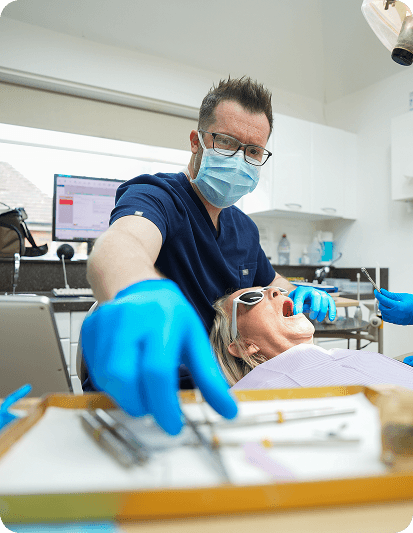
Explore managing uncertainty about an unfamiliar dental appointment with the clinician during an assessment.
Bring a list of current medicines and any relevant dental records to help the clinician assess suitability.
Note specific concerns that increase uncertainty so the team can plan how to make the appointment more predictable.
Ask at booking whether any escort or driving restriction might apply; the practice will confirm requirements for your chosen approach.
Follow the written aftercare instructions provided after your appointment to support a safe recovery.
Allow time at home to rest after sedation; how long you need depends on the method used and your personal response.
Contact the practice promptly if you experience unexpected symptoms or have questions during recovery.
Patients from Upminster are welcome to attend Start Smiling’s Ingatestone practice for a sedation dentistry consultation and treatment. The team arranges appointments that cover suitability, likely monitoring and aftercare so you can travel to your appointment with clearer plans and expectations.