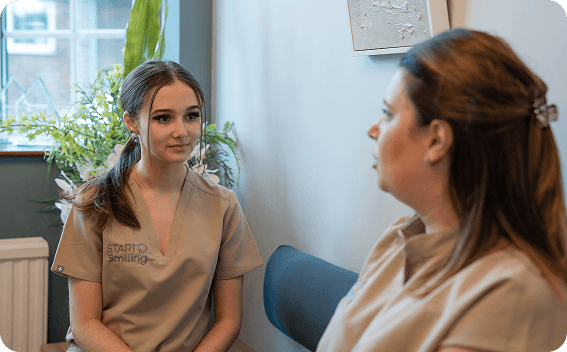
Consultation And Assessment
01
A consultation gives you time to discuss natural tooth colour, tooth and gum health, sensitivity and realistic shade expectations before deciding on care.
Smoking deposits tar and nicotine that can build up on tooth surfaces and gradually alter the way your natural tooth shade appears. Some discolouration sits on the outside and often responds well to improved dental hygiene and a professional hygiene appointment, while deeper intrinsic staining may need a dentist-supervised whitening approach to change the natural tooth colour. Teeth whitening only affects natural tooth material and does not change crowns, veneers, bridges or fillings. A clinician-led assessment at the Start Smiling practice in Ingatestone will identify stain type, check oral health and sensitivity, and explain realistic options, limitations and likely aftercare.
Start Smiling offers dentist-supervised professional teeth whitening for patients searching from Boreham, with appointments provided at the practice in Ingatestone. The dental team assesses natural teeth and gums, considers whether an at-home tray approach or another monitored option is appropriate, and gives personalised advice on safe use and aftercare. Discussions can include dental hygiene, how smoking-related staining responds to treatment, and whether a hygiene appointment should precede whitening.
Before any treatment the clinician will review oral health and untreated problems such as decay or gum disease to ensure suitability and comfort. Professional whitening aims to change the shade of natural teeth only and will not alter the colour of existing restorations; if you have crowns, porcelain veneers, bridges or fillings, the dentist will discuss how to manage colour matching as part of your treatment plan.
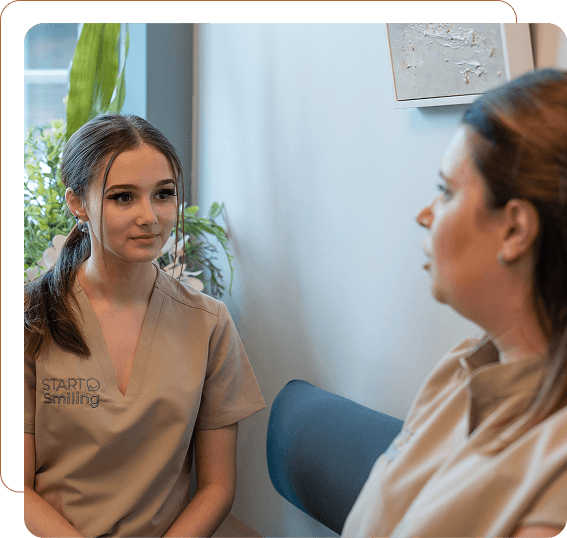
Professional whitening begins with oral-health assessment, realistic shade goals and individually explained instructions.
A consultation gives you time to discuss natural tooth colour, tooth and gum health, sensitivity and realistic shade expectations before deciding on care.
Professional hygiene care can reduce surface staining from smoking, tea and coffee and is sometimes the best first step before considering whitening to alter natural tooth shade.
Dentist-supervised whitening can change the appearance of natural teeth when intrinsic discolouration is present, though individual response varies and specific shade results cannot be guaranteed.
Temporary sensitivity is a possible effect of whitening; clinicians assess risk, recommend desensitising strategies and monitor your response during and after treatment.
Advice on reducing re-staining includes practical steps on dental hygiene and lifestyle choices that help maintain results and when to arrange review appointments.
Whitening affects natural tooth material only; existing crowns, veneers, bridges and fillings will not change colour, so discuss any restorative work needed to achieve a uniform appearance.
If suitable, the practice can provide dentist-supervised at-home tray whitening with professional gel and personalised instructions; tray provision and regimen are decided at consultation.
A dentist can outline realistic expectations, when top-up treatment may be considered and how whitening fits within your overall general dentistry plan.
Ask the team about teeth whitening, dental hygiene and how restorations might affect the final shade during your consultation.
All whitening options are discussed and managed under dentist supervision to ensure individual suitability and clinical oversight.
The team checks soft tissues, teeth and any untreated problems so cosmetic care proceeds safely and comfortably when appropriate.
If whitening is suitable, the dentist will create a plan tailored to your needs rather than a one-size-fits-all approach.
Professional whitening gels are used under clinical direction, with review appointments to monitor sensitivity and soft-tissue response.
The practice provides aftercare guidance and follow-up to help you manage temporary sensitivity and reduce the chance of re-staining.
Start Smiling Dental Practice is based at 5 Market Place, Ingatestone, and provides dentist-supervised whitening consultations and care. Telephone 01277 353456 for enquiries.
Your dentist will ask about your goals, concerns about smoking-related staining and any previous whitening you have tried.
A review of your dental and medical history, current medications and oral health determines whether whitening is appropriate and safe.
Different approaches, expected limitations relating to restorations and realistic outcomes are explained so you can make an informed choice.
If suitable, the team will outline a personalised plan that may include preparatory hygiene care and specific aftercare instructions.
Whitening is provided under clinical supervision, with monitoring for sensitivity or gum irritation and adjustments made if needed.
Aftercare guidance covers managing temporary sensitivity and reducing re-staining; follow your dentist’s instructions and arrange reviews if concerns persist.
Smoking-related discolouration varies from superficial deposits to deeper intrinsic changes; whether whitening is appropriate depends on the cause, depth of stain, your oral health and any existing restorations. A dentist will advise whether a hygiene appointment, whitening, restorative work or a combination of approaches is the most realistic route to improve appearance while protecting dental tissues.
Whitening is not suitable for everyone: active gum disease, untreated decay or very thin enamel may need treatment before cosmetic care, and under-18s are only considered in limited clinical circumstances. Because whitening does not change crowns, veneers or fillings, discuss how any restorations may affect the final look with your dentist and follow their individual instructions throughout care.
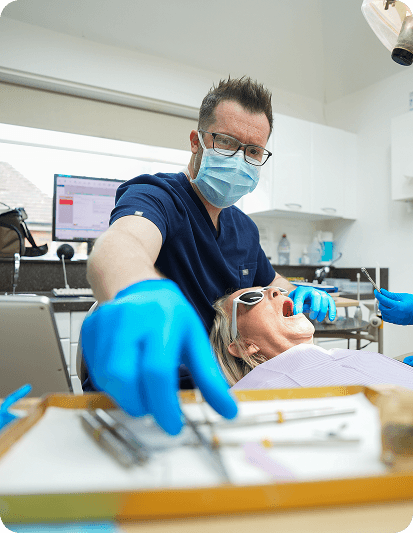
Ask for individual advice about smoking-related staining, possible limitations and any aftercare instructions that apply.
Book a new patient consultation if you are new to the practice so we can complete a full assessment beforehand.
Avoid major dental treatment immediately before whitening; untreated problems should be managed first.
Bring a list of current medications and any previous whitening products you have used to your appointment.

Follow the practice’s personalised aftercare guidance to reduce the chance of re-staining.
Maintain regular dental hygiene and attend reviews recommended by the dental team to support outcomes.
Report any prolonged sensitivity or gum irritation promptly so the team can review and advise further.
Follow your dentist’s instructions and arrange a review if you have concerns after treatment.
Patients from Boreham are welcome to attend a whitening consultation at the Start Smiling practice in Ingatestone, where an in-person examination helps determine whether staining is surface or intrinsic, assesses sensitivity risk and clarifies how restorations might affect results. A clinical consultation provides the most accurate assessment and a personalised plan.