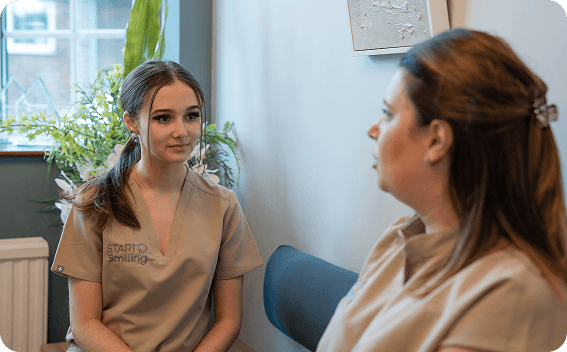
Consultation And Assessment
01
A consultation gives you time to discuss natural tooth colour, tooth and gum health, sensitivity and realistic shade expectations before deciding on care.
If you are thinking about at-home whitening trays, an important opening question is how a dentist would prescribe and monitor them for your teeth and gums. Start Smiling offers dentist-supervised professional teeth whitening from its Ingatestone practice; a new patient consultation confirms that your natural teeth and oral health are suitable, that any crowns, porcelain veneers or fillings are identified, and that sensitivity risks are considered. The dentist can explain whether custom trays, professional gel and written aftercare are appropriate, how progress would be reviewed, and which realistic limitations apply to restorations and to final shade outcomes.
Many people searching from Brentwood look for professional ways to brighten natural tooth shade under clinical supervision. A supervised home tray programme is one option Start Smiling may discuss after checking for untreated decay, gum disease or restorations that affect the likely result. The practice separates whitening from a dental hygiene appointment because hygiene removes surface deposits while whitening aims to change the intrinsic shade of natural teeth; both may form part of an overall cosmetic plan.
Planning often considers whether crowns, veneers, bridges or large fillings will need reviewing to match any new shade, since restorations do not change colour with whitening. The dentist will personalise guidance on wearing times, monitoring and sensitivity management, explain alternative approaches and advise on the next steps during a new patient consultation rather than promising a fixed number of shades or permanence.
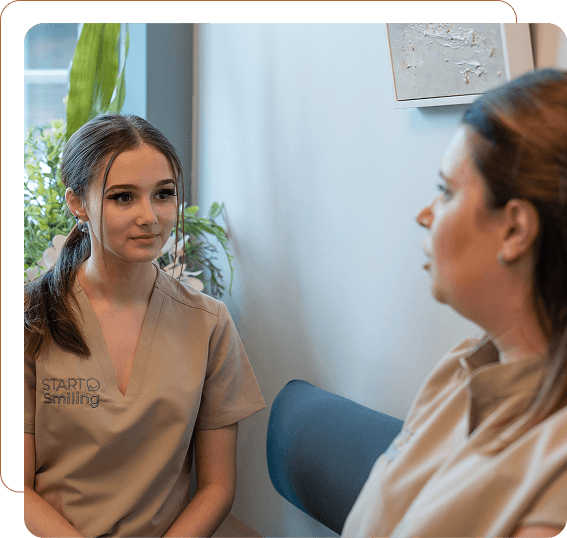
Professional whitening begins with oral-health assessment, realistic shade goals and individually explained instructions.
A consultation gives you time to discuss natural tooth colour, tooth and gum health, sensitivity and realistic shade expectations before deciding on care.
Professional whitening may reduce discolouration from ageing, certain medicines or trauma to natural teeth, subject to how individual teeth respond and the dentist’s clinical judgement.
Used alongside dental hygiene, whitening can help improve appearance affected by tea, coffee or tobacco by changing the tooth shade rather than only removing deposits.
When appropriate, bespoke trays are made to fit your teeth so the dentist can set a supervised home regimen using professional gel and precise guidance on wear and care.
Temporary sensitivity or gum irritation can occur; the dentist will explain desensitising measures, adjustments to wear time and monitoring to help manage symptoms.
Some patients may benefit from a staged plan that mixes in-practice checks with at-home trays; the dentist will discuss whether any combined approach is suitable for your needs.
Teeth respond differently and progress can vary; a clinician will outline realistic expectations and whether periodic review is advised to assess any change in shade.
After treatment you will receive personalised advice on short-term precautions, habits that influence longevity and when a review is appropriate to maintain results.
Whitening is provided under clinical supervision with suitability checks of natural teeth and gums before any home tray recommendation is made.
The team offers tailored advice on likely sensitivity, realistic expectations and written aftercare rather than promising fixed results.
Where suitable and following assessment, custom-fitted trays may be fabricated so professional gel can be used safely at home under instruction.
Only professional whitening products are used under dentist instruction and monitoring so that application and follow up meet clinical standards.
The practice provides follow-up and aftercare advice so progress and any sensitivity can be managed and adjustments made if required.
The dentist will confirm that whitening affects natural teeth only and will advise about crowns, veneers or fillings during treatment planning.
You will discuss your goals, any previous whitening and your general dental care so the dentist understands expectations and history.
The clinician will review medications, medical history and check for decay, gum disease or restorations that affect suitability for trays.
The dentist will explain supervised home tray options, possible alternatives, expected limitations for restorations and how monitoring would be arranged.
If trays are suitable, impressions or digital scans may be taken, and a personalised plan with written instructions and follow-up dates will be agreed.
You will be shown how to use trays and gel safely; the dentist will set a monitoring schedule to check results and manage any sensitivity.
Short-term sensitivity or gum irritation can occur; you will receive guidance on managing symptoms and on diet or habits to help maintain outcomes.
Not every patient is a candidate for cosmetic whitening. A dentist must assess untreated dental disease, the condition of existing restorations and any history of tooth sensitivity before recommending supervised home whitening trays or other treatments. For people with extensive crowns, porcelain veneers or large fillings the dentist will explain how whitening might affect overall appearance and whether restoration replacement would be needed to harmonise the result.
Teenagers under 18 are generally excluded from cosmetic whitening in the UK except in limited clinical circumstances and will be discussed during assessment. If you have a history of sensitivity, the dentist may suggest alternatives, a modified regimen or desensitising measures; the team will not guarantee that every patient avoids sensitivity or that a specific final shade will be achieved.
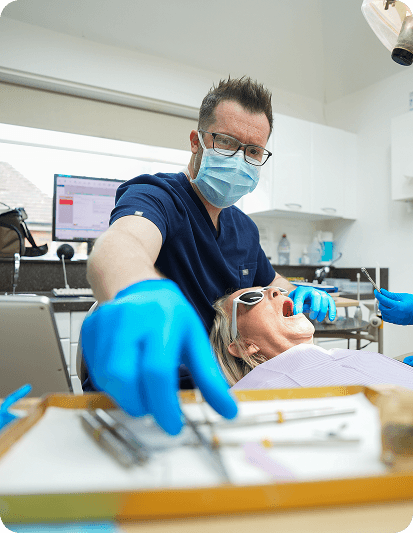
Ask for individual advice about supervised home whitening trays, possible limitations and any aftercare instructions that apply.
Make sure any outstanding toothache, decay or gum concerns are reported before a whitening plan is made.
Avoid unregulated over-the-counter bleaching products without discussing them with your dentist first.
Bring details of current medicines so the dentist can consider interactions and sensitivity risks.

Complete any recommended dental hygiene or restorative work before starting whitening to ensure a suitable foundation.
Follow the dentist’s written instructions for tray use, gel application and monitoring for best outcomes.
Report persistent sensitivity or gum irritation promptly so the team can adapt your plan or pause treatment.
Start Smiling provides teeth whitening consultations and supervised treatment planning from its Ingatestone practice, where the dentist examines your oral health and discusses suitable options. A face-to-face new patient consultation matters because it allows inspection of restorations, any necessary impressions and personalised aftercare advice rather than relying on remote guidance alone.