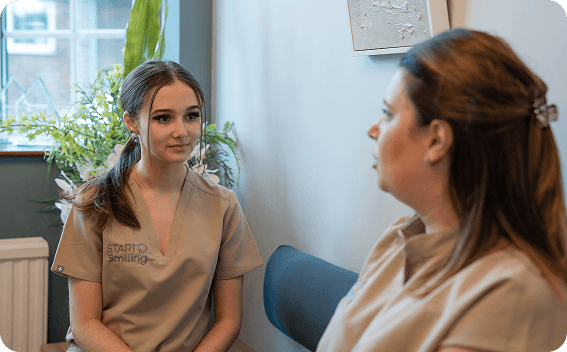
Consultation And Assessment
01
A consultation gives you time to discuss natural tooth colour, tooth and gum health, sensitivity and realistic shade expectations before deciding on care.
When patients ask how dentists explain potential limits to shade change, the short answer is that a precise final shade cannot be assured. Your dentist will review starting tooth colour, the type and cause of staining and whether crowns, veneers, bridges or fillings are present, because whitening affects natural tooth structure only. The assessment also checks oral health and sensitivity, and explains how age, trauma or some medicines may influence response. Aftercare and maintenance are discussed so you understand realistic outcomes, whether a home tray or supervised in-practice option is sensible and how dental hygiene and cosmetic choices such as porcelain veneers might play a role.
Start Smiling offers dentist-supervised professional teeth whitening from its Ingatestone practice. The team carries out a full suitability check of natural teeth and gums before recommending options that suit your needs; when appropriate this may include at-home tray whitening or a staged approach agreed during a new patient consultation. The practice does not guarantee any single method, tray provision, gel strength, timescale or a particular final shade for individual patients.
Whitening alters the shade of natural teeth only and will not change the colour of existing crowns, veneers, bridges or fillings. Your dentist will explain how restorations could affect overall appearance and outline cosmetic alternatives, including whether replacing restorations or considering porcelain veneers may be more appropriate. For a clear quote and a written estimate, request the current fee guide or book a consultation.
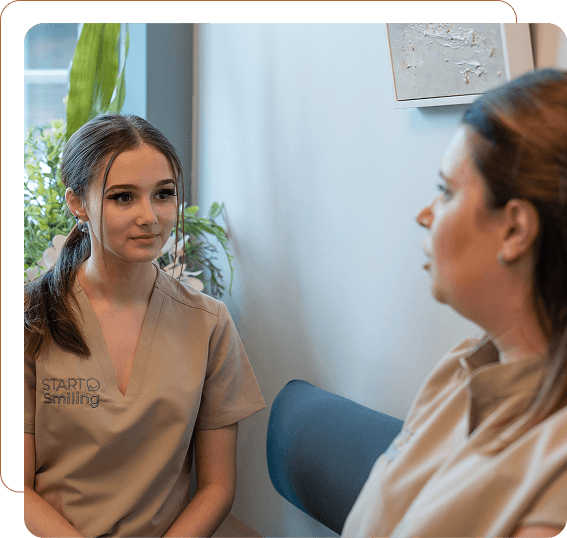
Professional whitening begins with oral-health assessment, realistic shade goals and individually explained instructions.
A consultation gives you time to discuss natural tooth colour, tooth and gum health, sensitivity and realistic shade expectations before deciding on care.
Professional whitening targets intrinsic discolouration and some surface stains, but the degree of change varies by stain type and may be limited for certain medication or trauma-related stains.
Subtle lightening of natural teeth can enhance the smile when expectations are realistic and the dentist has explained how restorations will be managed for a balanced result.
Where suitable, bespoke trays allow controlled at-home whitening under supervision; your dentist will explain correct use, likely duration and how this approach may affect shade change.
A dental hygiene appointment removes surface deposits, whereas whitening aims to change the internal shade of the natural tooth rather than only cleaning external stains.
Temporary sensitivity or mild gum irritation can occur; the team screens for risk, suggests sensitivity measures and tailors aftercare to reduce discomfort during and after whitening.
Staining from tea, coffee, smoking and ageing can affect how long whitening lasts; dentists provide personalised advice on maintenance and behaviour to help preserve results.
Dentists explain why a fixed number of shades cannot be promised, how restorations remain their original colour and when alternative cosmetic options may be preferable to achieve a uniform smile.
Your dentist will summarise likely outcomes during the consultation and advise on next steps.
Whitening is provided or overseen by dental professionals who check suitability and monitor for sensitivity or adverse effects.
Oral health is assessed first; untreated decay, active gum disease or significant sensitivity are addressed before any whitening is recommended.
The team gives bespoke advice about realistic outcomes, the limits of shade change and appropriate aftercare rather than promising fixed results.
Clinically appropriate gels and techniques are used under supervision and applied according to the dentist’s instructions.
Custom trays may be offered following assessment, subject to suitability, rather than being promised in every case.
Follow-up appointments and tailored advice on sensitivity management and ongoing maintenance form part of the service.
You will discuss your smile goals, concerns and why you are considering whitening so the dentist can set realistic expectations from the start.
A review of your medical history, medications, oral health and existing restorations determines whether whitening is suitable and safe for you.
Your dentist will explain the realistic changes you can expect, how restorations might affect the result and alternative cosmetic choices if needed.
If whitening is appropriate, a tailored plan is agreed that may include custom trays, at-home steps or a staged approach, all guided by the dentist.
Whitening products are used under dental instruction with monitoring for sensitivity or adverse effects; the dentist adjusts the plan if needed.
You receive personalised guidance on managing temporary sensitivity, avoiding re-staining and arranging review appointments to check results and maintenance.
Cosmetic whitening is an option for many adults but is not suitable for everyone. The team will check for active dental disease, the condition of fillings and crowns, and any sensitivity that might be worsened by treatment; under-18s are generally not offered cosmetic whitening except in limited clinical circumstances discussed during a consultation.
If your smile includes restorations such as crowns or veneers, whitening natural teeth may make those restorations appear relatively darker. Your dentist will explain these limitations, discuss whether replacement restorations or other cosmetic routes are more appropriate, and describe how aftercare and dental hygiene help preserve any improvement.
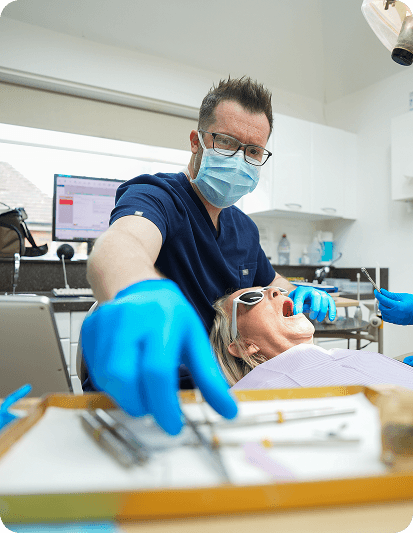
Ask for individual advice about limits of shade change, possible limitations and any aftercare instructions that apply.
Tell your dentist about any medications or previous tooth trauma before treatment.
Bring information about recent dental work, especially crowns, veneers or large fillings.
Follow the practice’s specific pre-treatment advice rather than a generic schedule.
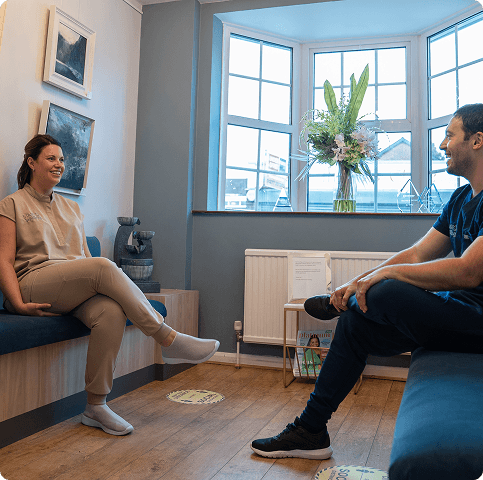
Use only the products and timings recommended by your dentist during home whitening.
Report any unexpected sensitivity or gum irritation promptly so the team can review it.
Arrange follow-up appointments as advised to check progress and discuss maintenance.
Individual aftercare will be provided and should be followed to help protect enamel and maintain results.
Patients from South Woodham Ferrers are welcome to attend consultations and treatments at Start Smiling’s Ingatestone practice so dentists can perform the necessary checks, review restorations and provide in-person explanations and bespoke aftercare rather than relying on remote advice. Whitening suitability is discussed at the Ingatestone practice, where a dentist can review dental history, tooth colour and sensitivity.