Consultation And Assessment
01
A consultation gives you time to discuss natural tooth colour, tooth and gum health, sensitivity and realistic shade expectations before deciding on care.
If you are wondering whether now is the right time to whiten your teeth, the answer depends on your individual oral health and any existing restorations. Whitening products act on natural tooth enamel and can increase temporary sensitivity, so a dentist will check for decay, gum disease, cracked teeth, recent trauma, large restorations and current sensitivity before recommending treatment. If problems are present, whitening is often delayed or avoided and alternatives such as bonding or replacement of crowns may be suggested. This page explains why a suitability assessment matters, common reasons to postpone, and the cosmetic or restorative routes a dentist may propose instead.
Start Smiling provides dentist-supervised professional teeth whitening from its Ingatestone practice for patients searching from Upminster. Appointments and suitability checks are carried out at the Ingatestone clinic where the dentist will assess natural teeth and gums, discuss realistic outcomes and outline any complementary care that might be needed, such as a dental hygiene appointment before whitening.
Not every patient follows the same pathway. After assessment, the team may recommend supervised at-home trays where appropriate, or discuss combined approaches subject to clinical findings; custom trays are provided only when clinically suitable. Whitening will lighten natural tooth enamel but does not alter crowns, veneers, bridges or fillings, so your dentist will review restorations and may propose alternatives such as matching or replacing restorations if needed.
Professional whitening begins with oral-health assessment, realistic shade goals and individually explained instructions.
A consultation gives you time to discuss natural tooth colour, tooth and gum health, sensitivity and realistic shade expectations before deciding on care.
When teeth are healthy and suitable, whitening can lighten natural enamel and reduce the appearance of intrinsic or external staining from factors such as tea, coffee, smoking or ageing, while making realistic limits clear.
A carefully managed whitening plan can help people feel more confident about their smile, provided expectations are discussed and it is clear that restorations may not change colour.
Personalised plans take account of stain type, sensitivity and any restorations and will explain whether at-home trays, monitored approaches or alternative cosmetic options such as porcelain veneers or bonding are more appropriate.
If you already have sensitive teeth, the dentist may delay whitening or suggest preparatory measures, such as desensitising treatments or staged care, to reduce the likelihood of increased sensitivity during whitening.
Because whitening changes natural tooth shade only, the presence of crowns, bridges, veneers or large fillings affects the treatment plan and may lead to discussion of restoration replacement after whitening to achieve a uniform result.
A dental hygiene appointment can remove surface deposits ahead of whitening and the team will advise on maintenance steps to help results last as long as possible within individual limits.
If whitening is unsuitable, alternative cosmetic or restorative options such as bonding or new restorations may be discussed to meet your aesthetic goals alongside general dentistry care.
Ask your dentist about how tooth health, restorations and sensitivity affect whether whitening is suitable for you.
Treatment is provided under dentist oversight so suitability is assessed and product use is clinically monitored.
A full check of natural teeth and gums identifies decay, gum problems, sensitivity and restorations that may influence timing and appropriateness.
We will explain realistic outcomes, the limits of whitening on restorations and alternatives where whitening is not the best option.
Custom at-home trays may be provided after assessment; provision depends on clinical findings and patient needs.
Only professional-grade whitening products are used as directed by the supervising dentist while recognising individual response varies and results are not guaranteed.
Follow-up care allows the team to manage any sensitivity, check gingival health and discuss restoration adjustments if required.
You will be asked about your goals, past whitening, lifestyle staining habits and what you hope to achieve so expectations can be aligned with clinical realities.
A review of your medical and dental history, current medications and any recent dental treatment will help identify factors that affect suitability for whitening.
The dentist will explain realistic outcomes, how whitening affects natural teeth only and whether alternative cosmetic solutions such as bonding or new restorations may be preferable.
If suitable, a tailored plan sets out the recommended approach, whether custom trays are appropriate and what monitoring will be needed during treatment.
When treatment begins it is undertaken under professional guidance or with dentist instructions, and the team will monitor response and any sensitivity throughout.
You will receive instructions on managing temporary sensitivity, guidance on limiting staining exposures as advised and advice on maintaining results in the longer term.
Deciding if whitening is right for you requires a clinical assessment. Whitening affects natural enamel only, so if you have crowns, veneers, bridges or large fillings your dentist will explain how restorations influence the likely outcome and whether alternatives such as replacing restorations or minimal bonding are preferable.
Existing sensitivity, untreated decay, active gum disease or recent dental trauma commonly lead dentists to advise postponing whitening until issues are treated; age and medications are also considered. If whitening is delayed, the practice can suggest interim cosmetic or restorative pathways and a timeline for when whitening might become appropriate.
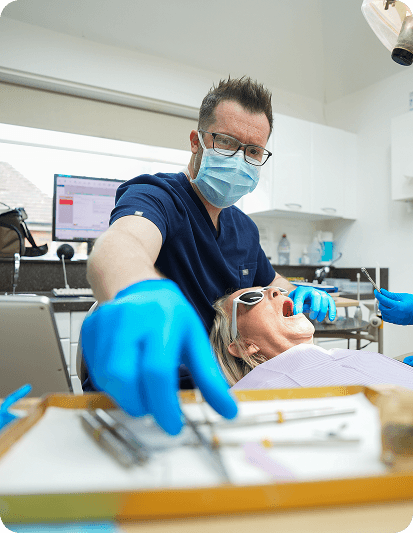
Ask for individual advice about when whitening may be unsuitable, possible limitations and any aftercare instructions that apply.
Tell the dentist about current sensitivity or recent dental pain before booking.
Attend a dental hygiene visit if recommended to remove surface staining ahead of whitening.
Bring details of any current medications and recent dental treatment to your consultation.

Avoid booking whitening if you suspect active decay or gum disease, as these conditions usually need treatment first.
Expect advice on managing temporary sensitivity and which desensitising products may help if sensitivity increases.
Check how crowns, porcelain veneers and fillings may affect your final smile plan and whether restoration work is needed.
Follow the dentist's individual instructions on preparation and aftercare to protect oral health and aesthetic outcomes.
Having your consultation at the Ingatestone practice matters because the dentist will carry out a full oral assessment, discuss tooth shade and restorations in a clinical setting, and arrange any follow-up or additional general dentistry care with records in place. Whitening suitability is discussed at the Ingatestone practice, where a dentist can review dental history, tooth colour and sensitivity.