Replace One Missing Tooth
01
An implant-supported crown may replace one missing tooth where suitable, following clinical assessment and careful planning.
Dental implants near Ingatestone Hall are artificial tooth-root replacements placed in the jaw to support crowns, bridges or dentures. At Start Smiling Dental Practice in Ingatestone we offer assessment, planning and private dental implant treatment in a calm, modern environment. Implant care is staged and clinical suitability must be confirmed before any surgical treatment proceeds.
Start Smiling Dental Practice welcomes patients from Ingatestone Hall and the surrounding area. Our private service focuses on clear explanations, tailored planning and comfortable care so you know what to expect at each stage. If you are considering dental implants near Ingatestone Hall, the first step is a clinical assessment to review your oral health, bone condition and treatment goals.

Dental implants can address a range of tooth loss concerns when clinical assessment indicates suitability.
An implant-supported crown may replace one missing tooth where suitable, following clinical assessment and careful planning.
Multiple implants can support a fixed bridge when more than one tooth is missing and clinical conditions allow.
Implants can help retain or stabilise an existing denture to improve fit and confidence when appropriate.
Implant restorations recreate a chewing surface closer to a natural tooth compared with some removable options.
Crowns or prosthetic teeth on implants can be matched for shape and colour to look natural.
An implant replaces a root-type function which may help support the jaw where bone is sufficient.
Implants do not normally rely on neighbouring teeth for support as some bridgework does.
With good home care and regular professional reviews, implant restorations can be maintained as part of ongoing dental care.
Calm, modern environment to help you feel at ease during appointments.
Patient-focused communication so options, risks and stages are explained clearly.
Thorough assessments including medical history review, clinical examination and imaging where needed.
Restorative planning that considers appearance, function and provisional phases.
Ongoing maintenance and check-ups to monitor your implant and surrounding tissues.
Care from our dental team who will discuss costs, timing and alternatives before treatment begins.
A clinician reviews your mouth, gums, remaining teeth, medical history and suitability for implants in a consultation.
X-rays or digital scans may be taken to plan implant position and the final restoration.
Active gum disease or decay is treated first; some patients may need bone grafting or other preparatory work.
The implant post is placed in the jawbone under local anaesthetic; procedural details and aftercare are explained beforehand.
Time is allowed for the implant to integrate with bone and for tissues to settle while the practice monitors progress.
A crown, bridge or denture is fitted on the implant when clinically appropriate and ongoing reviews are arranged.
Dental implants may be suitable if you have one or more missing teeth and adequate bone and gum health, but suitability can only be confirmed by clinical assessment. Factors such as smoking, active gum disease, certain medical conditions, medicines and oral hygiene affect both suitability and risk.
Some people require additional procedures, like bone grafting, to create the conditions for an implant; others may be able to follow a more straightforward pathway. The team will explain alternatives such as bridges, removable dentures or choosing not to replace a tooth, and will discuss risks, likely stages and expected maintenance so you can make an informed choice.
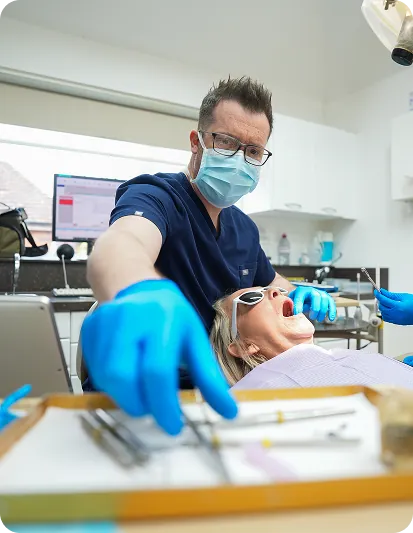
We provide complementary care to prepare for implants and maintain them over time.
Restorative dentistry including crowns, bridges and prosthetic work to complete implant restorations.
Periodontal assessment and treatment for gums before and after implant placement.
Digital imaging with X-rays or scans for accurate planning where clinically appropriate.

Hygiene care and professional cleaning to protect implant health provided alongside other treatments. Hygiene care
Prosthetic adjustments, repairs or replacements to implant-supported restorations when needed.
Follow-up reviews to monitor the implant and surrounding tissues over time.
Start Smiling Dental Practice is in Ingatestone and welcomes patients travelling from Ingatestone Hall by car, train, bus or on foot. When you contact us the team will provide practical appointment information and answer any queries about your visit.
If you are considering dental implants near Ingatestone Hall, call Start Smiling Dental Practice on 01277 353456 to arrange an implant consultation. During your visit we will assess your oral health, discuss suitable options and outline the next steps so you can decide with clear information.