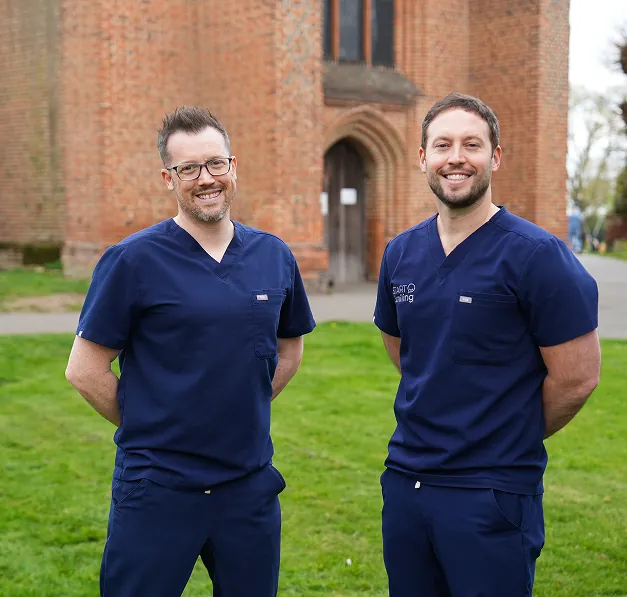
Replace A Full Arch Of Teeth
01
Multiple dental implants may support replacement teeth for a complete upper or lower arch where clinically appropriate, following detailed assessment and planning.
Full arch dental implants replace a complete upper or lower set of teeth using multiple dental implants placed in the jawbone to support replacement teeth across a full upper or lower arch. At Start Smiling Dental Practice in Ingatestone we offer a tailored assessment and treatment pathway for people considering full arch dental implants who live near Thorndon Country Park. Multiple dental implants act as artificial tooth roots and are planned to support either a fixed implant-supported bridge or a removable implant-retained overdenture, depending on your clinical needs and preferences. Your assessment and planning explain the options, likely next steps and any imaging that may be needed as part of careful treatment preparation, and we will discuss alternatives and continued maintenance.
Our private dental practice offers time for clear conversation about risks, benefits and alternatives so you can make an informed decision. We welcome enquiries from people near Thorndon Country Park who want to understand whether full arch dental implants may be appropriate.
A consultation will cover your oral and medical history, a clinical examination and any imaging or scans required before a personalised fee estimate is prepared. In the assessment and planning paragraph earlier we explain full arch dental implant treatment and the likely diagnostic steps.
We aim to give clear information about what to expect, including any preparatory care, likely imaging and the pathway to treatment so you can make an informed choice.
Practical benefits full arch implant care can offer when clinically appropriate.
Multiple dental implants may support replacement teeth for a complete upper or lower arch where clinically appropriate, following detailed assessment and planning.
Implant-retained restorations can offer more reliable retention than some conventional dentures.
Implant-supported restorations can expand comfortable chewing options compared with some removable solutions.
Restorations supported by implants can help support facial tissues and a natural tooth appearance when teeth are missing.
You may have a fixed implant-supported bridge or a removable implant-retained overdenture depending on the plan.
Implant solutions can reduce dependence on denture adhesives for some patients.
A full-arch approach may be considered when many teeth are failing or cannot be predictably maintained.
Combined with regular maintenance, implant restorations can be part of a longer-term plan to manage oral health.
We will discuss alternatives such as conserving suitable teeth, conventional dentures or implant-retained removable options when appropriate.
We explain options clearly so you can decide without pressure.
Your assessment and treatment planning are coordinated by our dental team who explain each stage.
We review teeth, gums, bone and health factors before recommending a plan.
Where needed, x-rays, scans or digital records are used to plan surgery and restorations precisely.
Appointments, planning and aftercare are arranged to suit private patients’ needs.
We agree a review schedule and home-care approach to support long-term outcomes.
A full assessment and discussion of your dental history, general health, medications, oral hygiene and treatment goals will determine suitability for a full arch approach.
Records and planning including x-rays, digital scans or 3D imaging where needed will inform a written plan explaining options, risks and likely next steps.
Preparatory care may include stabilising gum disease or extracting teeth that cannot be retained; bone grafting may be advised only when required.
Implant placement is a surgical procedure commonly carried out under local anaesthetic with measures for comfort; the number and position of implants vary by restorative plan.
Healing and review appointments monitor integration with the jawbone and the health of surrounding tissues; temporary restorations may be used in some plans.
Final restorations are fitted when clinically appropriate and ongoing maintenance and review are agreed as part of long-term care.
Suitability varies between patients and depends on many factors your clinician will assess. We review any remaining teeth to determine whether they can reasonably be maintained; removal is only considered when clinically necessary to achieve a predictable result. Clinical factors such as gum health, bone quantity and quality, bite relationships, medical history, medicines, smoking status, oral hygiene ability and expectations all influence the plan.
We will explain alternatives such as retaining and restoring suitable teeth, conventional dentures or implant-retained removable options so you can compare likely benefits, risks and long-term maintenance needs. It is also important to understand that one or more implants may fail to integrate and that prosthetic complications can occur; these possibilities form part of the consent and planning discussion.
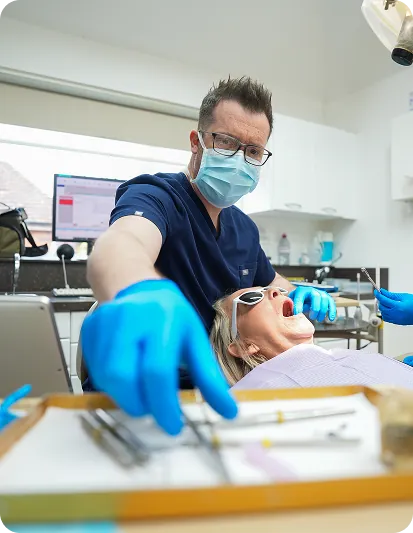
Care and maintenance to support implant health and restorations.
Professional hygiene care to support gum health before and after implant treatment.
Regular clinical reviews to monitor implants, surrounding gums and the restoration.
Advice and demonstration of home cleaning techniques for implant-supported restorations.
Maintenance of crowns, bridges or overdenture components when needed.
Prompt assessment and treatment planning for any peri-implant issues that arise.
Tailored recall intervals based on your oral health and the restoration type.
Long-term care may include professional hygiene care to protect your gums and restorations.
Start Smiling Dental Practice is based in Ingatestone and welcomes patients from Thorndon Country Park and nearby areas such as Brentwood and Shenfield. Start Smiling Dental Practice is based in Ingatestone and welcomes patients from Thorndon Country Park.
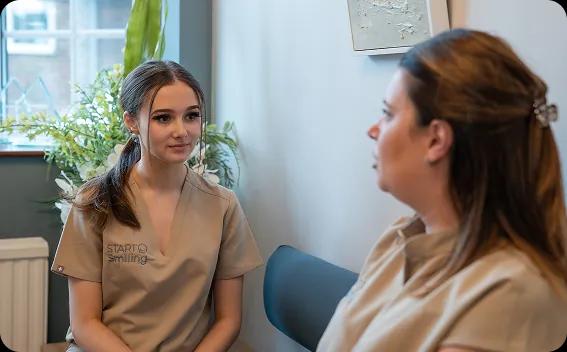
If you are considering full arch dental implants near Thorndon Country Park, a consultation at our Ingatestone practice will allow us to assess suitability, explain restorative options and outline likely next steps.
Because full-arch treatment varies by clinical need, the current fee guide is a useful starting point before a personalised plan and estimate are prepared.